





For the most part, I've simply copy and pasted the Kansas curriculum content standards for 7th grade here, and added the resources that I've found to assist in teaching them. Thus far, this is a largely a collection of graphic organizers, but I hope to add more varied resources in the future.
Vocabulary
Goal: The student expands their vocabulary.
- Determines meaning of words or phrases using context clues (e.g., definitions, restatements, examples, descriptions, comparison-contrast, clue words) from sentences or paragraphs.
- Use cloze reading strategies.
- Determines meaning of words through structural analysis, using knowledge of Greek, Latin, and Anglo-Saxon roots, prefixes, and suffixes to understand complex words, including words in science, mathematics, and social studies.
- Word Roots Software from The Critical Thinking Company (also available in workbook form).
- Vocabulary from Classical Roots: Greek and Latin word root study (workbook format), available in five levels.
- Words on the Vine: 36 Vocabulary Units on Root Words: Workbook for grades 5-8.
- Rummy Roots and More Roots: 4-in-1 card game set to learn Greek and Latin roots.
- Identifies and determines the meaning of figurative language (similes, metaphors, analogies, hyperbole, onomatopoeia, personification, and idioms).
- Figuratively Speaking: Using Classic Literature to Teach 40 Literary Terms: Workbook for grades 5-8.
- An Introduction to Poetry by X.J. Kennedy and Dana Gioia
- Teaching Literary Elements with Picture Books: Fifteen lessons for using picture books to teach literary elements such as point of view, voice, irony, theme, metaphor, simile, and more.
- Using Picture Storybooks to Teach Literary Devices: Recommended Books for Children and Young Adults: A reference book containing over 120 picture books useful for teaching 41 literary devices.
- Figurative Language: Part of a 36-page packet of graphic organizers (.PDF).
- Identifies word connotations and word denotations.
The choice of words that a writer uses, and the tone of those words, is what evokes an emotion in us. As an active reader, you should question the author's use of words: Why does your author use neutral, positive, or negative connotative language? How does it affect the characters and you? - Figuratively Speaking: Using Classic Literature to Teach 40 Literary Terms: Workbook for grades 5-8; contains a lesson on connotation and denotation.
- Connotation and Denotation: An excellent 8-page handout with exercises (.PDF).
- Shades of Meaning: A lesson plan from Visual Thesaurus.
- Denotation and Connotation: A worksheet on identifying positive, neutral, and negative connotations (.PDF).
- Teaching Connotation and Denotation: Part I, Part II
Goal: The student reads and comprehends grade-level-appropriate material. They describe and connect the essential ideas, arguments, and perspectives of the text by using their knowledge of text structure, organization, and purpose. The student comprehends a variety of texts (narrative, expository, technical and persuasive).
- The student identifies characteristics of narrative, expository, technical, and persuasive texts.
- Narrative Text Structure: A 34-page packet of lessons and graphic organizers, aimed at grades 4-5 (.PDF).
- Five Expository Text Structures and Their Associated Signal Words: Handout (.PDF)
- Persuasive and Instructive (Technical) Texts: Handout (.PDF)
- Find a Purpose for Reading: How Does the Author Communicate?: Graphic organizer, part of a 36-page packet of graphic organizers (.PDF).
- The student understands the purpose of text features (e.g., title, graphs/charts and maps, table of contents, pictures/illustrations, boldface type, italics, glossary, index, headings, subheadings, topic and summary sentences, captions, sidebars, underlining, numbered or bulleted lists) and uses such features to locate information in and to gain meaning from appropriate-level texts.
- Teaching Students to Read Nonfiction by Alice Boynton and Wiley Blevins
- Gathering Information on a Topic Graphic organizer, part of a 36-page packet of graphic organizers (.PDF).
- The student uses prior knowledge, content, and text type features to make, to revise, and to confirm predictions.
- Reading Strategies Checklist for Students: Part of a 36-page packet of graphic organizers (.PDF).
- Prediction Chart: Part of a 36-page packet of graphic organizers for teachers (.PDF).
- The student generates and responds logically to literal, inferential, evaluative, synthesizing, and critical thinking questions before, during, and after reading the text.
- The student uses information from the text to make inferences and draw conclusions.
- Making Inferences Graphic Organizer from Scholastic (.PDF)
- Drawing Conclusions Graphic Organizer from Scholastic (.PDF)
- The student analyzes how text structure (e.g., sequence, problem-solution, comparison-contrast, description, cause-effect) helps support comprehension of text.
- The student compares and contrasts varying aspects (e.g., characters' traits and motives, themes, problem-solution, cause-effect relationships, ideas and concepts, procedures, viewpoints, authors' purposes) in one or more appropriate-level texts.
- Compare/Contrast Venn Diagram Graphic Organizer from Scholastic (.PDF)
- The student uses paraphrasing and organizational skills to summarize information (e.g., stated and implied main ideas, main events, important details) from appropriate-level narrative, expository,
technical, and persuasive texts in logical order. - How to Summarize and Paraphrase : A Handout from Freeology (.PDF).
- Summarizing Graphic Organizer from Scholastic (.PDF)
- Use Text Organization: Summarize Sections: Graphic organizer, part of a 36-page packet of graphic organizers (.PDF).
- The student identifies the topic, main idea(s), supporting details, and theme(s) in text across the content areas and from a variety of sources in appropriate-level texts.
- Main Idea and Supporting Details Graphic Organizer from Scholastic (.PDF)
- What's the Main Idea? Fishbone Graphic Organizer from Scholastic (.PDF) or Fish Bones Graphic Organizer from Freeology (.PDF): The students write the main idea of the story across the backbone of the fish and on lines stemming out from the fish, they write answers to the questions “Who is the author talking about?”, “What did they do?”, “When did they do it?”, “Where did they do it?”, “How did they do it?”, and “Why did they do it?”
- The student follows directions explained in a technical (instructive) text.
- The student identifies the author's position in a persuasive text and describes techniques the author uses to support that position (e.g., bandwagon approach, glittering generalities, testimonials, citing statistics, other techniques that appeal to reason or emotion).
- Identifying Voice: A persuasive text lesson plan (.PDF).
- Find a Purpose for Reading: Create a Pro and Con Chart (.PDF)
- The student distinguishes between fact and opinion, and recognizes propaganda (e.g., advertising, media, politics, warfare), bias, and stereotypes in various types of appropriate-level texts.
- Fact and Opinion Graphic Organizer from Education Place (.PDF)
Goal: The student uses literary concepts to interpret and respond to text.
- The student describes different aspects of major and minor characters (e.g., their physical traits, personality traits, feelings, actions, motives) and explains how those aspects influence characters' interactions with other characters and elements of the plot, including resolution of the major conflict
- Character Sheet and Traits Graphic Organizer from Scholastic (.PDF)
- Characterization Graphic Organizer (.PDF)
- Cluster Chart: To keep track of character traits or main ideas; part of a 36-page packet of graphic organizers (.PDF).
- Character Predictions: Graphic organizer; part of a 36-page packet of graphic organizers (.PDF).
- The student identifies and describes the setting (e.g., environment, time of day or year, historical period, situation, place) and analyzes connections between the setting and other story elements (e.g., character, plot).
- See: Deconstructing Penguin: Parents, Kids and the Bond of Reading by Lawrence and Nancy Goldstone and Fresh Takes on Literary Analysis: How to Teach What Really Matters About Character, Setting, Point of View, and Theme by Jeffrey Wilhelm
- The student identifies major and minor elements of the plot (e.g., problem or conflict, climax, resolution, rising action, falling action, subplots, parallel episodes) and explains how these elements relate to one another.
- Story Map (1) Graphic Organizer from Education Place (.PDF)
- Story Map (2) Graphic Organizer from Education Place (.PDF)
- Story Map (3) Graphic Organizer from Education Place (.PDF)
- Plot Map Graphic Organizer (.PDF)
- Story Plot Graph and Story Plot Terms Handout (.PDF)
- Visualize: Create a Story Strip: Graphic organizer; part of a 36-page packet of graphic organizers (.PDF).
- Predict Outcomes: Graphic organizer to predict the outcome of a piece; part of a 36-page packet of graphic organizers (.PDF).
- Use Text Organization: Making a Story Map: Graphic organizer, part of a 36-page packet of graphic organizers (.PDF).
- Use Text Organization: Fill in a Plot Diagram: Graphic organizer, part of a 36-page packet of graphic organizers (.PDF).
- The student recognizes aspects of theme (e.g., moral, lesson, meaning, message, author's ideas about the subject) and recurring themes across works (e.g., bravery, loneliness, loyalty, friendship).
- Find a Purpose for Reading: Keeping Track of the Author's Key Ideas: Graphic organizer, from a 36-page packet of graphic organizers (.PDF).
- The student identifies literary devices (e.g., foreshadowing, flashback, figurative language, irony, metaphor, tone/mood, symbolism).
- Reading Response Form: Includes a place to write the literary device(s) used and explain how the device is used (.PDF).
- Figuratively Speaking: Using Classic Literature to Teach 40 Literary Terms: Workbook for grades 5-8.
- The student contrasts point of view (e.g., first and third person, limited and omniscient, subjective and objective) in narrative text and explain how they affect the overall theme of the work.
- The student identifies common structures and stylistic elements in literature, folklore, and myths from a variety of cultures.
- The student compares and contrasts customs and ideas within literature
representing a variety of cultures. - The student recognizes connections between cultures and experiences through a variety of texts.


A "Just William" television series was produced in the 1960s, 1970s, and 1990s, with the BBC creating four new episodes again last year (these will be released on DVD in the UK March 2011).
Below are the episodes from 1994 with links to those that are currently available online.
Series One:
- William and the Russian Prince
- William's Busy Day
- William - The Great Actor
- William and the White Elephants
- Finding a School for William
- William's Birthday
- William Clears The Slums
- Parrots for Ethel
- William's Truthful Christmas
- Boys Will Be Boys
- William and the Ebony Hair-Brush
- William and the Old Man in the Fog
- William Turns Over a New Leaf

BBC: Just William, 2010 (Available on DVD 03/2011)
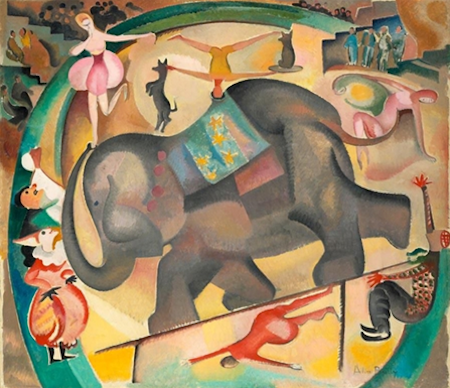
L'Elephant
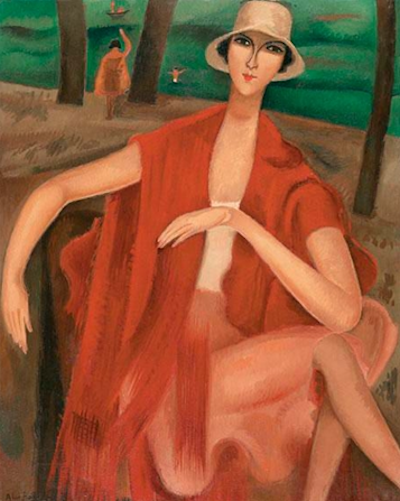
Femme en rouge
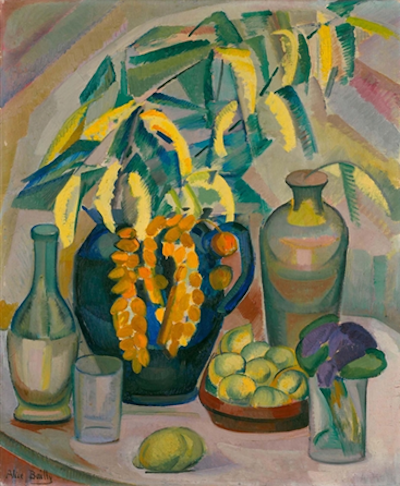
Nature mort aux mimosas
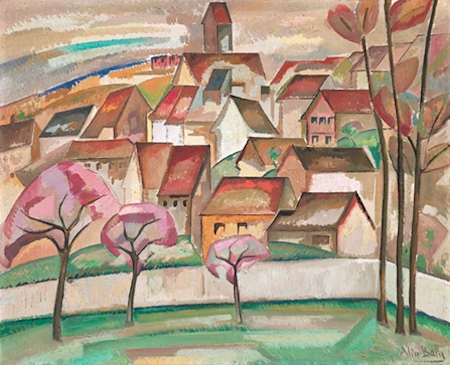
Le village

Paysage à Orsay (L'Arbre Vert)
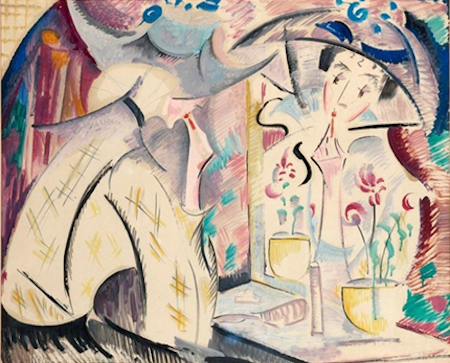
Femme au miroir
Alice Bailly (February 25, 1872 – January 1, 1938) was a radical Swiss painter, known for her interpretation of cubism and her multimedia wool paintings. Biography

Femme au gant blanc
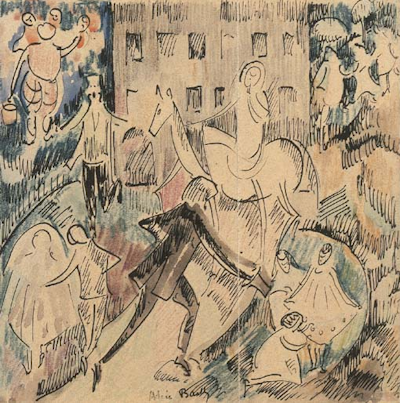
Hochzeitsfest
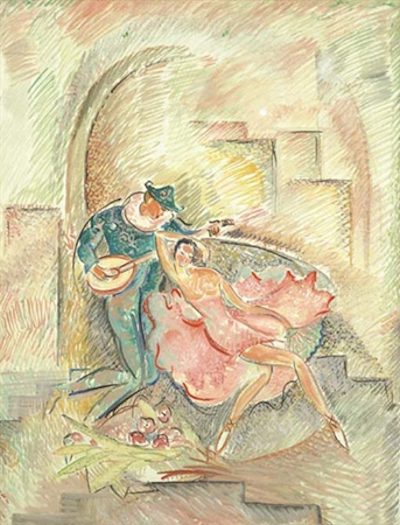
Arlequin et femme
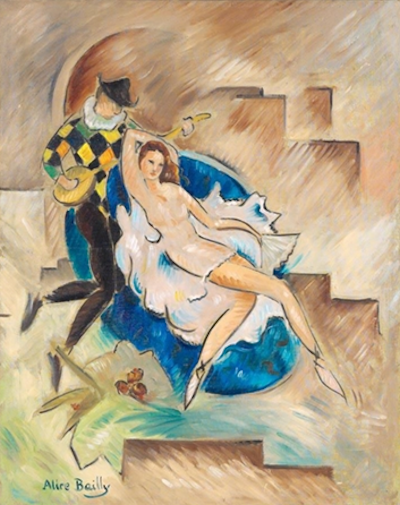
Danseuse avec arliquin
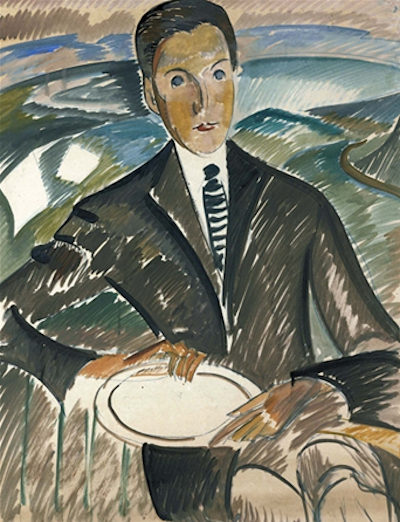
Portrait d'un jeune homme
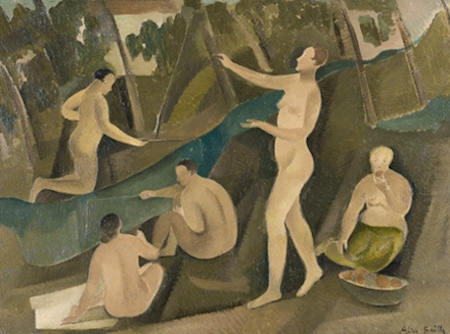
Au bord du ruisseau

© Bernard Buffet, 1956
Dictation, often largely adopted as a method of teaching, is really only a method of testing spelling. A child who makes no mistakes learns nothing from it. Still, dictation, employed, like oral spelling, with moderation and intelligence, is a useful and necessary exercise. It may be made an incentive for the careful study of all the hard words in a given 'piece,' and it shows what pupils and what words call for special attention.
Having selected the passage to be dictated, the teacher reads it aloud. A knowledge of the meaning of the whole will help the childdren to catch the sound of each separate word, and to decide between the different spellings by which the same sound is sometimes represented.
The passage is then dictated in sections of from two to six words, according to the age of the children and to the sense. The teacher should speak clearly enough for every one who is listening to hear and understand, and there should be, as a rule, no repetition. Children will not attend the first time if they think that there will be a second time. The rate of dictation should be regulated by watching a good writer of average speed. 'Copying' must be prevented by every means, moral and mechanical.
After the dictation comes the correction. If this be not thorough, the exercise is worse than valueless. A misspelling indicates a false impression of the form of a word, and this is deepened by iteration. Every mistake must, therefore, be discovered, and the correct spelling written a sufficient number of times to remove the false and imprint the true impression. The best method of correction is for the teacher to examine every exercise himself (the children, meanwhile, being usefully employed), but this is possible only with small classes. The method of mutual correction generally adopted is open to three objections—the corrector's own right spelling may be confused or wrong spelling confirmed by the mistakes of the corrected; errors may be passed over; and there is a constant temptation for the child to look at his own exercise instead of the one before him. This temptation can be largely overcome by good discipline, and entirely obviated by a simple device. The child at the upper end of each row of desks takes his own book (or slate) and that of his neighbour to the lower end of the row; the remaining books (or slates) are then passed up two places.
A better plan than mutual correction is for each child to correct his own, but this can be followed only when the training in honesty and carefulness has been successful.
Whatever method is adopted for marking errors, all words misspelled should be written accurately several times. While this is being done some pleasant occupation should be found for the children who have no errors, and the teacher should go round the class glancing at each exercise, and more than glancing at the exercises of children likely to have many errors.
A note should be made of the words misspelled, and after a few days they should be dictated again, for it must be remembered that memory impressions are deepened by interest or by repetition, and, as spelling cannot often be made interesting, repetition is essential.
(From The Art of Teaching by David Salmon, 1898)
The Dictation Day by Day/Modern Speller Series
Suggestions to Teachers: One dictation exercise constitues a day's lesson; but, in addition, assign three or four words from the review lists which follow every fourth lesson. When the four dictations and the review have been taught, review the week's work and teach no new matter. Keep a list of the words misspelled daily, and on Friday drill on these.
- The Modern Speller, Book 1 by Kate van Wagenen
- The Modern Speller, Book 2 by Kate van Wagenen
- Dictation Day by Day, A Modern Speller, 3rd Year by Kate van Wagenen
- Dictation Day by Day, A Modern Speller: 4th Year by Kate van Wagenen
- Dictation Day by Day, A Modern Speller: 5th Year by Kate van Wagenen
- Dictation Day by Day, A Modern Speller: 6th Year by Kate van Wagenen
The Journal of a Disappointed Man by W.N.P. Barbellion
0 comments Posted by Kristine at 1/15/2011 07:18:00 PM
This week I read The Journal of a Disappointed Man by W.N.P. Barbellion, my third book for 52 Books in 52 Weeks. The Journal was recently re-published by Little Toller Books in the UK and is also available in the public domain via Google Books and the Internet Archive. It has been called a "masterpiece of personal observation," likened to the work of writers such as Franz Kafka and James Joyce, and was described by Ronald Blythe as "among the most moving diaries ever created."
W.N.P. Barbellion was the nom-de-plume of Bruce Frederick Cummings (7 September 1889 - 22 October 1919). The initials W.N.P. stood for Wilhelm Nero Pilate, whom the author thought to be the most despicable people in history (Wilhelm being Kaiser Wilhelm the II since the diaries were published during the First World War). Barbellion was a name above a shop in South Kensington that Cummings passed every day.

"He read all kinds of books, from Kingsley to Carlyle, with an insatiable appetite. It was about this time, too, that he began those long tramps into the countryside, over the hills to watch the staghounds meet, and along the broad river marshes, that provided the beginnings and the foundation of the diary habit, which became in time the very breath of his inner life.
In these early years, I remember, the diary took the outward form of an old exercise book, neatly labelled and numbered, and it reflected all his observations on nature. The records, some of which were reproduced from time to time in The Zoologist, were valuable not only in their careful exactitude, but for their breadth of suggestion, and that inquiring spirit into the why of things which proved him to be no mere classifier or reporter. They were the outcome of long vigils of concentrated watching."
He taught himself how to dissect, and afterwards his patient and unerring skill surprised his examiners. "Scientists and naturalists of repute--reading his published records of observations--called upon him and were puzzled to find him a mere boy." By the time he was fourteen, "his fixed determination to become a naturalist by profession was accepted by all of us as a settled thing." (A.J. Cummings, A Last Diary)
Despite being almost entirely self-taught, in October 1911 he placed first in an examination for a position at the British Museum of Natural History in London, and in January 1912 commenced an assistantship there.
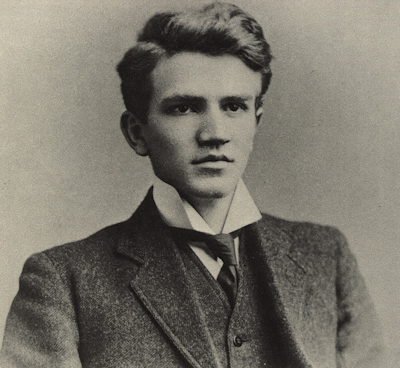
Bruce Frederick Cummings c. approx. 1910
"For an unusually long time after I grew up, I maintained a beautiful confidence in the goodness of mankind. Rumours did reach me, but I brushed them aside as slanders. I was an ingénu, unsuspecting, credulous." (The Journal of a Disappointed Man)
Gradually, as his ambitions began to change, his writing evolved from the dry scientific notes of the earlier Journal into something more personal and literary (and hence, imminently more readable!).
"He wrote down instinctively and by habit his inmost thoughts, his lightest impression of the doings of the day, a careless jest that amused him, an irritating encounter with a foolish or a stupid person, something newly seen in the structure of a bird's wing, a sunset effect. It was only on rare occasions that he deliberately experimented with forms of expression." (A.J. Cummings, A Last Diary)
There is an element of despair throughout the Journal as he struggled with chronic ill-health (and a fair amount of hyperchondria), and also occasional bouts of depression. "Chronically sub-normal" was how he once described his condition to his brother. In London, he grew slowly and steadily worse and, upon the advice of his brother saw a "first-class nerve specialist" who promptly diagnosed him with what we now call multiple sclerosis. Yet the decision was made not to tell him the true nature of his illness, so as not to precipitate his demise.
In October of 1914, he discovered the Journal of the Russian painter Marie Bashkirtseff (1858–1884). “I am simply astounded," he writes. “It would be difficult in all the world’s history to discover any two persons with temperaments so alike. She is the ‘very spit of me’!” This seems to have inspired his decision, in December of that year, to "prepare and publish a volume of this Journal."
The diaries, up through the winter of 1917 were eventually published in March 1919 and the book was an immediate sensation (though many believed it was a work of fiction, written by H.G. Wells who had written book's preface). A later journal entitled A Last Diary was published after his death in 1919, as well as a book of essays, Enjoying Life and Other Literary Remains.

"I do not think that there can be two minds about the great literary qualities and the poignant interest of his one tragic work. It is a book that is continually sought and steadily reprinted – the story of a soul in the grip of the obscure and pitiless arterial [sic] disease that finally killed him, resolved to find expression and a use for itself in the ever darkening shadow of death. 'Barbellion’s Diary' I am convinced will still be read with interest, curiosity and sympathy, when most of the larger more fluid successes of to-day have passed out of attention." (H. G. Wells, letter to Barbellion’s widow, 8 September 1925, Source)
"For as long as his remarkable journal is published he will live with it, his constrained existence celebrated for the courage that so brightly distinguishes it." (William Trevor, “On the Shelf”, Sunday Times, 5 November 1995, Source)
"To me the honour is sufficient of belonging to the universe — such a great universe, and so grand a scheme of things. Not even Death can rob me of that honour. For nothing can alter the fact that I have lived; I have been I, if for ever so short a time. And when I am dead, the matter which composes my body is indestructible—and eternal, so that come what may to my 'Soul,' my dust will always be going on, each separate atom of me playing its separate part — I shall still have some sort of a finger in the pie. When I am dead, you can boil me, burn me, drown me, scatter me — but you cannot destroy me: my little atoms would merely deride such heavy vengeance. Death can do no more than kill you." (The Journal of a Disappointed Man)
Boat on the River Taw, Barnstaple, Devon © dotjay
Bill Brandt, British photographer and photojournalist
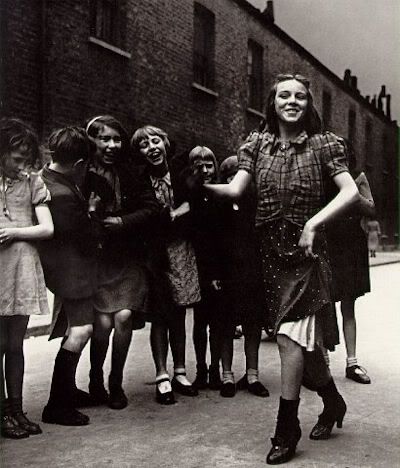
Lambeth Walk, 1936
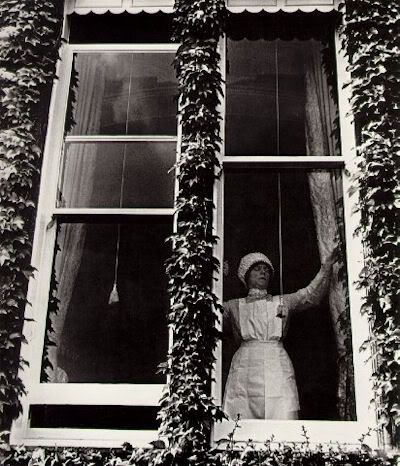
Parlourmaid in Window, Kensington, 1936
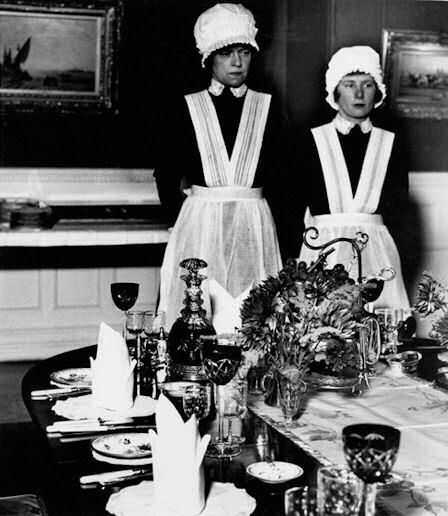
1936
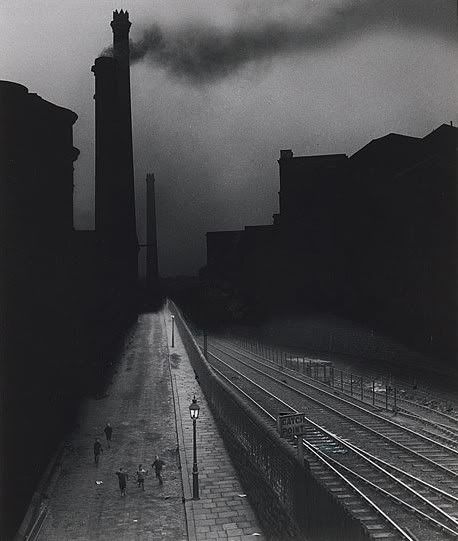
Halifax, 1937
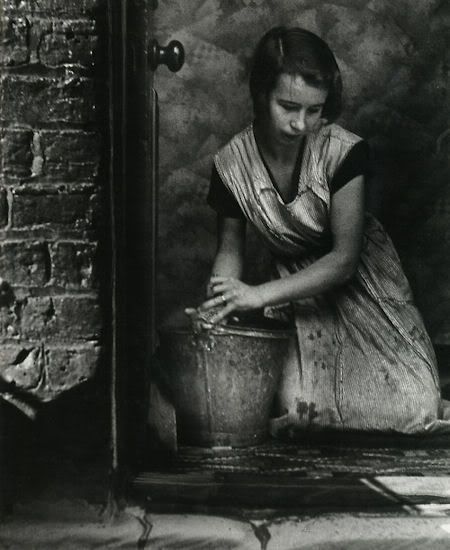
East End, 1937
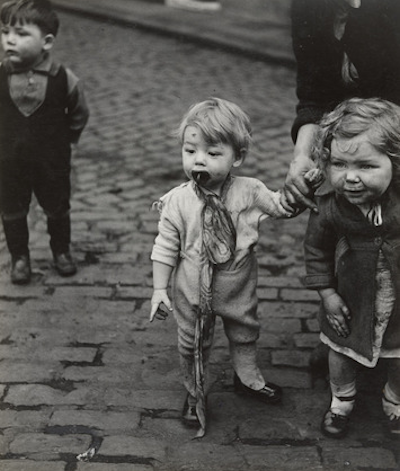
Children in Sheffield, 1937
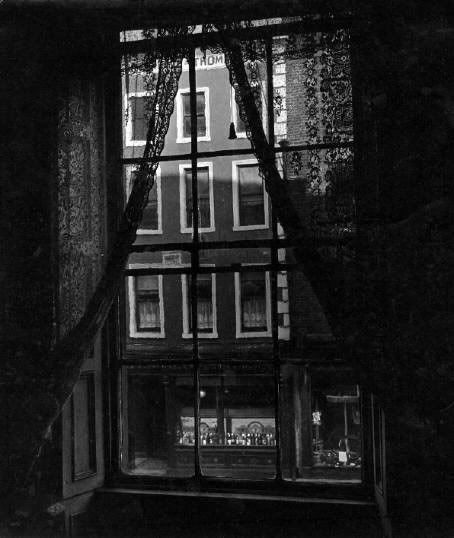
The House Opposite 12 , Anguir Street, Dublin
(Birthplace of Thomas Moore)
(Birthplace of Thomas Moore)
Subscribe to:
Comments (Atom)