




Showing posts with label Liturgical Year. Show all posts
Showing posts with label Liturgical Year. Show all posts

© Adocel
On this day, December 12th, people from all parts of Mexico make their way to Mexico's chief religious center at the Basilica of the Virgen of Guadalupe, located in Villa de Guadalupe Hidalgo, a northern neighbourhood of Mexico City. There, they will celebrate the Nuestra Senora de Guadalupe (Our Lady of Guadalupe) with a mass ceremony and a traditional fair in her honor.
The Dia de la Virgen de Guadalupe became an national holiday in 1859. At the plaza the fiesta starts after the mass ceremony with delicious food, vendors selling crafts and clothes, along with many performences of music and dance. In other parts of Mexico, similar festivities are organized with some unique variations of the celebration. In some places, altars of flowers are built in her honor. Other parts have traditional food prepared like buñuelos, raspados and tortas as well as activities like parades, rodeos, and bullfights. (Source)
Books/DVD
- The Lady of Guadalupe by Tomie dePaola (Ages 9-12; 48 pgs)
- Saint Juan Diego and Our Lady of Guadalupe by Josephine Nobisso (Ages 9-12; 120 pgs)
- A Handbook on Guadalupe by Sister Mary Francis
- The Wonder of Guadalupe: The Origin and Cult of the Miraculous Image of the Blessed Virgin in Mexico by Francis Johnston

Religious Goods
- MexGrocer.com has a variety of Guadalupe items
- Our Lady of Guadalupe at Etsy
- Guadalupe Papel Picado Banner
- See Also: eBay
- Our Lady of Guadalupe at Sancta.org
- Proyecto Guadalupe (in Spanish, requires Google Translate)
- Our Lady of Guadalupe Feast Day Plans at O Night Divine - very comprehensive!
- Our Lady of Guadalupe at Domestic-Church.com


© ektarama
CraftsTomie dePaola has a great story on his website about Our Lady of Guadalupe as the Patron of Artists and I could not agree more! Without a doubt, she has been inspiring artists (Catholic or not) for the past 500 years. To explore Our Lady of Guadalupe in art:
Articles:
- Chasing Virgins
- Virgin With a Rebel Vibe
- The Virgin Had This Homeboy's Back
- Virgin as Muse
- Virgin as Spin-Mistress
- Icons of the Virgin (in Spanish)
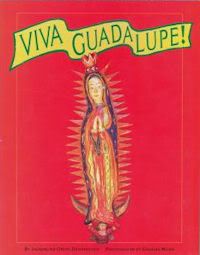

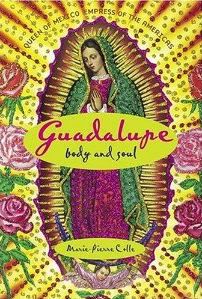

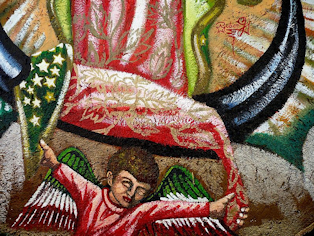
© Jani-que
Art/Craft Projects:
- How to Draw Our Lady of Guadalupe (.PDF) from CHC
- Our Lady of Guadalupe Coloring Book by Mary Fabyan Windeatt (Coloring page here)
- Our Lady of Guadalupe and Juan Diego Coloring/Paper Dolls at Paper Dali
- Our Lady of Guadalupe Ornament at 4Real Forums
- Clay Guadalupe at Crayola
- Virgin of Guadalupe Plaster Craft Mold (9.75" H)
- Our Lady of Guadalupe Fabrics at Some Art Fabric
- Virgin of Guadalupe Sugar Mold at Mexican Sugar Skulls
- Virgen de Guadalupe at Silver Crow Creations
- Virgin of Guadalupe Hand-Carved Rubber Stamp at Etsy
- Our Lady of Guadalupe Stamp at Catholic Rubber Stamps
- Our Lady of Guadalupe Marian Grotto Kit at Illuminated Ink
- Our Lady of Guadalupe Cut 'n Color Book at Illuminated Ink
- Sopapillas with Chile Verde Con Carne
- Bunuelos (Mexican donuts; traditional food)
- Pan Dulce (Sweet bread; traditional food)
- Our Lady of Guadalupe Recipes at Catholic Cuisine
- Cupcakes - See below (Rose Picks, Foil Baking Cups)





Feast Day: November 22nd
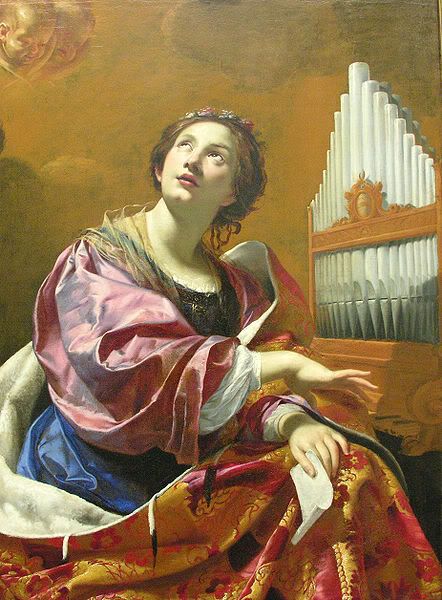
St. Cecilia by Simon Vouet
St. Cecilia by Simon Vouet
Patroness of Music
More than seventeen hundred years ago there lived a little girl whose name was Cecilia. This little girl is now remembered, the world over, for her goodness and her love of music.
Cecilia's mother and father were Roman nobles. They had a beautiful palace in one of the most pleasant parts of Rome. There, in the midst of all that was rich and grand, the child Cecilia was born.
As she grew up, this gentle maiden cared but little for the wealth and grandeur around her. She loved God, and in everything she did she tried to please Him. She sang sweetly and at a very early age made hymns of her own.
She sang these songs to our dear Lord, Jesus Christ. She loved Him so much that she used to carry the story of His life in the folds of her dress so that she might read of Him at any time. Her voice was so sweet that, when she sang, the angels came to listen.
She learned also to play upon the organ, that thus through music she might further show her love for God. She played with so much skill that to this day she is often called the first of organists.
At that time the rulers of Rome did not believe in Christ. They were very cruel to Christians and wished to drive all of them from the city.
For this reason they put to death some of Cecilia's dearest friends and threw others into prison. At last she too was taken and made to stand up before one of the rulers.
"What is your name?" he asked.
"Christian is my name," she said, "though I am commonly called Cecilia."
" What gods do you serve? "
" I serve Jesus Christ," was the answer.
Then she was led forth to her death; but she went bravely and without fear, knowing that her Lord was with her.
(From Standard Catholic Readers By Grade, Third Year by Mary Doyle)
Resources
- Who Is St. Cecilia? A beautiful biography from the Dominic Sisters of St. Cecilia
- St. Cecilia Prayers, Hymn and Biography from Via Rosa
- St. Cecilia Biography ~ Holy Spirit Interactive Kids
- St. Cecilia Coloring Page at CHC
- St. Cecilia: Saint of the Catacombs Coloring Book at By Way of the Family
- Nameday Ideas for the Feast of St. Cecilia at Catholic Culture
- Recipe: Cécilias
- Recipe: Pettole (Traditional Italian fritters for St. Cecilia's Day)
- Recipe: St. Cecilia Punch (for adults!)
- Recipe: Bread Pudding with St. Cecilia Sauce
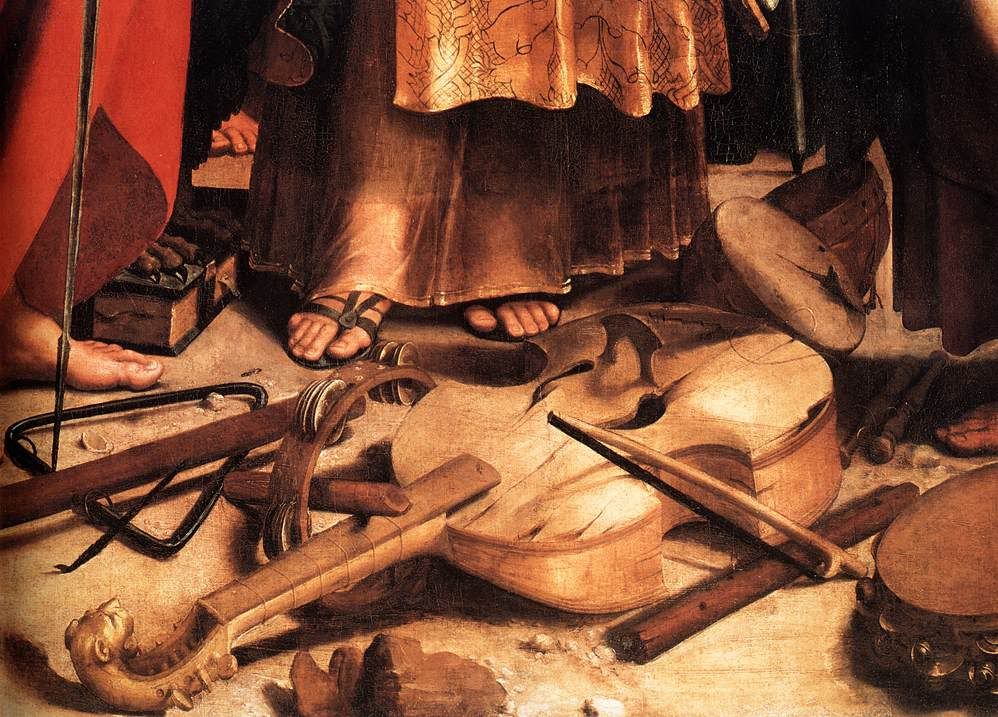
St. Cecilia by Raffaello Sanzio
Purcell; Handel; Haydn: To Saint Cecilia:

Händel: Ouverture (An Ode for St Cecilia's Day):

Ode on St. Cecilia's Day (Vidal) Overture 1/2:
Ode on St. Cecilia's Day (Vidal) Overture 2/2:
Hymn to St. Cecilia (Benjamin Britten):
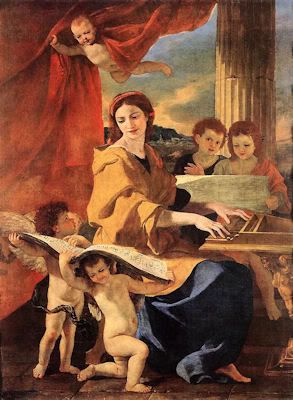
St. Cecilia by Nicolas Poussin
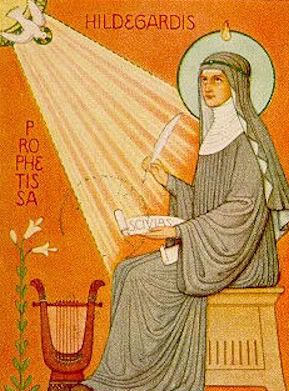
Feast Day: September 17th
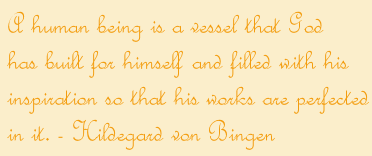
Hildegard von Bingen (1098-1179) was a most extraordinary woman: Benedictine abbess, scholar, counselor, visionary, herbalist, healer, dietician, naturalist, poet, artist, composer and lyricist. She is the first saint I read about in-depth when initially exploring Catholicism and I have been fascinated by her ever since.
For her feast day I have compiled the following ideas:
Reading:
For her feast day I have compiled the following ideas:
Reading:
- Children's Biography: Hildegard of Bingen: Woman of Vision by Carol Reed-Jones (88 pgs; Preview here)
- A short biography of Hildegard can also be found in Chapter 6 of Outrageous Women of the Middle Ages
- For adults, I highly recommend Hildegard of Bingen: The Woman of Her Age by Fiona Maddocks and/or Hildegard of Bingen: A Spiritual Reader by Carmen Acevedo Butcher
- Recipe: St. Hildegard's Cookies of Joy ("Eat them often," she said, "and they will calm every bitterness of heart and mind - and your hearing and senses will open. Your mind will be joyous, and your senses purified, and harmful humours will diminish...")
- Cookbook: From Saint Hildegard's Kitchen: Foods of Health, Foods of Joy by Jany Fournier-Rosset (Sample recipes here)
- Tea: Hildegard Blends
In addition to the above reading and food/drink, we will be listening to some of her music -- numerous CDs are available and there is much of it on YouTube also. I especially like The Origin of Fire: Music and Visions of Hildegard von Bingen, a CD by Anonymous 4.
I had dearly hoped that the DVD of Margarethe von Trotta's Vision: From the Life of Hildegard von Bingen would be available in the U.S. this year, but alas, it appears that the film is due for another round in select theaters first (though of course, none in Kansas).
Lastly, we will be making a simple herbal salve from our Herbal Medicine Making Kit, though I think any sort of herbal craft would work equally well. For more on Hildegard as an herbal healer see: Hildegard of Bingen: Herbal Healer of the Rhine, an article from The Herb Companion magazine.

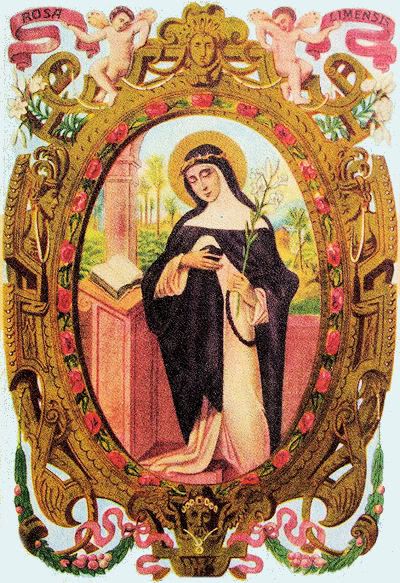
Rose’s parents hoped that she would get married, but Rose wanted to give her life completely to God. She told her parents that her dream was to join the convent to become a nun, but they would not give her permission. They needed Rose at home, helping to support the family.
Rose moved into a hut in the garden. She earned money by selling her flowers during the day. At night she did needlework, making designs with colorful threads on cloth. People bought the clothing she decorated. With the money she earned, Rose helped her family and also bought food for the needy people in her community. She put her prayers into action. With help from her brother, she added rooms to her hut and cared for homeless children and the elderly. She became a much-loved woman everywhere in her country.
 We honor Rose of Lima on August 23. She was the first person from the New World—the Americas—to be named a saint. Rose’s life teaches us to reach out to our neighbor and to use our talents to help them live better lives. (Source)
----
Canonized as Santa Rosa de Lima, she is the patron saint of the Americas, needleworkers, gardeners and florists. She is symbolized by her love for the Holy Infant, roses, as a Dominican tertiery holding roses and as a Dominican tertiery accompanied by the Holy Infant. A very interesting article about her visions can be found here; biography here.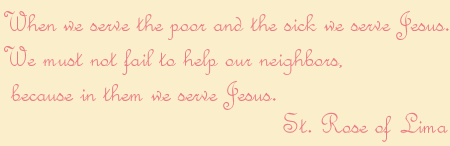
- Food/Drink Ideas at Catholic Cuisine
- Encanelado (Cinnamon Cake; a traditional Peruvian dessert)
- Rosy Fruit Punch Recipe at Taste of Home
- St. Rose of Lima: The Story of the First Canonized Saint of the Americas by Mary Fabyan Windeatt
- St. Rose of Lima Coloring Page at CHC (via Catholic Icing)
- The Litany of St. Rose of Lima
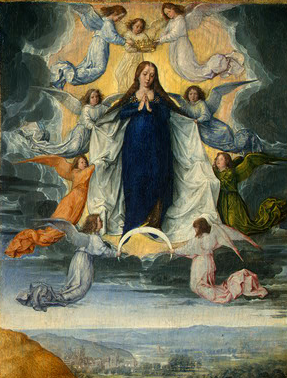
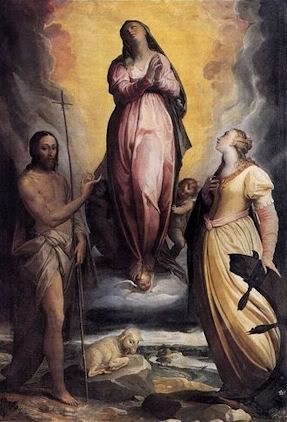
Yesterday, August 15th, was the Solemnity of the Assumption of the Blessed Virgin Mary, though we were not able to enjoy our liturgical activities until today.
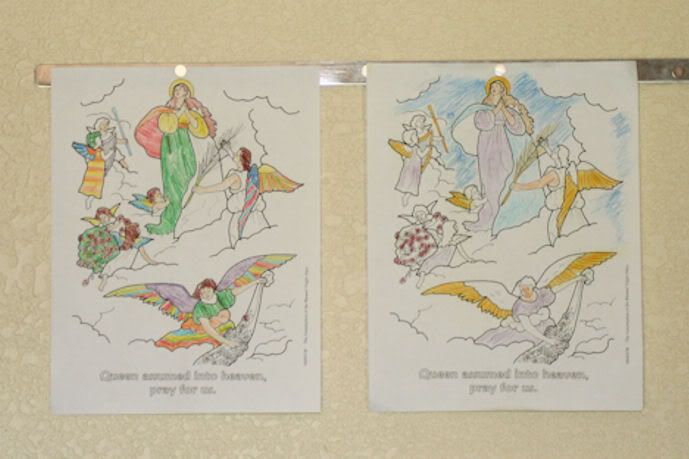
We began by reading about the Assumption in Mondays With Mary and My Nameday--Come for Dessert. We also read the legend, "How Flowers Regained Their Scent" and discussed the traditional blessing of herbs on this day. While I was reading, the kids enjoyed some delicious lavender cookies and colored a page from our Mary Most Holy Coloring Book by Katherine Sotnik.
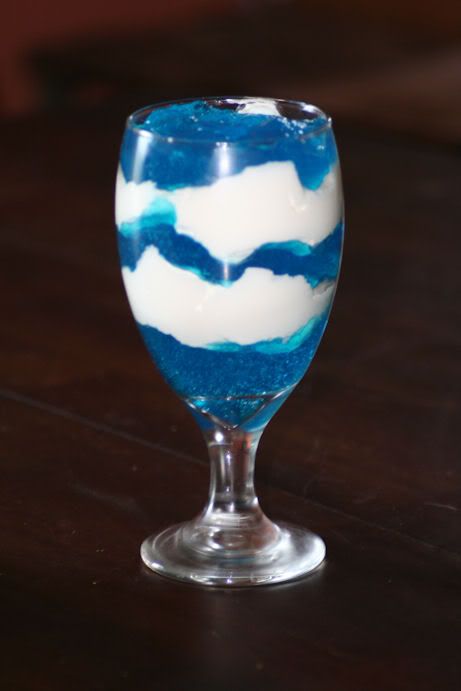
Finally, later in the afternoon, we enjoyed some "Assumption Jello" (via Catholic Icing)...this was a huge hit!
NOVEMBER (Dedicated to The Holy Souls)

November 1st: All Saints' Day
- Father Phillip Tells a Ghost Story by Susan A. Brindle
- Projects: All Saints' Party Decorations, Saints and Souls Tree
- See also: My Dia de los Muertos post
- Catholic Mosaic: The Spirit of Tio Fernando (Also suggested: The Catholic Book of the Dead by Ann Ball)
- Mondays with Mary: "The Presentation of the Blessed Virgin Mary" plans, p. 38-41
November 22: St. Cecilia
November 27th: Our Lady of the Miraculous Medal
November 27th: Our Lady of the Miraculous Medal
- St. Catherine Miraculous Medal Unit Study
- Our Lady of the Miraculous Medal Story Coloring Book by Mary Fabyan Windeatt
- Mondays with Mary: "Our Lady of the Miraculous Medal" plans, p. 46-49
- Video: St. Catherine Laboure and the Miraculous Medal

December 4th: St. Barbara
- Traditional recipes can be found here.
- See last year's Saint Nicholas Day Plans
- Take It to the Queen by Josephine Nobisso
- Mondays With Mary: "Solemnity of the Immaculate Conception" plans, p. 133-136
- Saint Juan Diego and Our Lady of Guadalupe by Josephine Nobisso
- Catholic Mosaic: The Lady of Guadalupe by Tomie dePaola
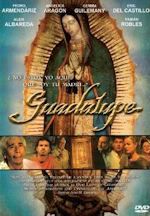
- DVD: Guadalupe
- Mondays with Mary: "Our Lady of Guadalupe" plans, p. 91-93
- Our Lady of Guadalupe Story Coloring Book by Mary Fabyan Windeatt
- Craft: Our Lady of Guadalupe Tinwork Ornament
- Food/Drink: Our Lady of Guadalupe at Catholic Cuisine
- See also: Our Lady of Guadalupe at O Night Divine (very thorough!)
- See last year's: Santa Lucia Day Plans
- St. Lucy Unit Study
- The Night of Las Posadas by Tomie dePaola; Las Posadas: An Hispanic Christmas Celebration by Diane Hoyt-Goldsmith
- Las Posadas at Catholic Culture: I, II, III
- Las Posadas and Christmas Novena from Fish Eaters


© Guago
Last year I really wanted to have a Día de los Muertos/Day of the Dead celebration, but was entirely too disorganized to make it happen. This year, I'm planning early so that I have ample time to collect supplies and get prepared (for one thing, the sugar skull blanks will need to be made well in advance so that they have time to dry.)
Day of the Dead is a traditional Mexican holiday that coincides with All Saints' Day (November 1st) and All Souls' Day (November 2nd). In most regions of Mexico, November 1st, called Día de los Inocentes ("Day of the Innocents") or Día de los Angelitos ("Day of the Little Angels"), honors children and infants. Deceased adults are honored on November 2nd, called Día de los Muertos/Día de los Difuntos ("Day of the Dead"). Some good information about the holiday can be found here, and you can find all things Day of the Dead here (including a 31-page Teacher Packet and videos).
Below are some of my ideas for our celebration. More inspiration can be found at the Día de los Muertos group on Flickr and DIYLife's Day of the Dead Traditions and Projects is extremely thorough.


- El Dia De Los Muertos: The Day of the Dead (Rookie Read-About Holidays) by Mary Dodson Wade
- Day of the Dead by Tony Johnston and Jeanette Winter
- Calavera Abecedario: A Day of the Dead Alphabet Book by Jeanette Winter
- The Spirit of Tio Fernando: A Day of the Dead Story by Janice Levy
- Mexican Folk Art Coloring Book

- Day of the Dead Crafts: A long, awesome list of crafts from AZCentral -- See also: Diary of a Crafty Chica; I'm thinking we'll try the Embossed Tin Prayer Candle and Calaca Sugar Masks
- Day of the Dead Crafts: More than 24 Projects that Celebrate Dia de los Muertos by Kerry Arquette
- See also: Making Shadow Boxes and Shrines by Kathy Cano-Murillo (I've had this book for years and love it!)
- In addition to the links below, Silver Crow Creations is one of my favorite suppliers for Day of the Dead craft items.
- Easy Paper Flowers (Alternatively, you could order them here) -- Marigolds are the traditional Day of the Dead flower.
- Papel Picado Banners
- Calaveras
- Prayer Candles
- Party and Craft Supplies (Also, here)
- For the feast table: Mexican Serape Blankets or a Mexican Oil Cloth Tablecloth (Day of the Dead designs are available), Sugar Skulls, Pan de Muertos, etc.
- Day of the Dead Altar/Ofrenda (See also: Flickr Offrendas Group)

© John3000

- Cookbook: Frida's Fiestas: Recipes and Reminiscences of Life with Frida Kahlo by Marie-Pierre Colle (Includes a 'Day of the Dead' menu with recipes)
- Pan de Muerto (Bread of the Dead) recipe
- Calabaza en Tacha recipe (Candied Pumpkin)
- Virgin Banana Margaritas
- Skull Cakes


Pan de Muerto © 2Camels

© Vecky22
Subscribe to:
Posts (Atom)