





One of my recent ideas for school next year was to put together a science fiction unit for J, something that he would absolutely love (he wants to be an astrobiologist). Below are the books that I initially purchased, though I expect that some will be culled and others added as I get further into my pre-reading and planning. In particular, I like the idea of studying the books by sub-genre (time travel, dystopian, apocalyptic/post-apocalyptic, etc.), so there's clearly some organizational work to be done. More than likely our "spine" will be the amazing Prentice Hall Anthology of Science Fiction and Fantasy, a college text which I'll use selectively.
- Amazing Journeys: Journey to the Center of the Earth, From the Earth to the Moon, Circling the Moon, 20,000 Leagues Under the Seas, and Around the World in 80 Days (1864-1873) by Jules Verne
- The Time Machine (1895) by H.G. Wells
- Space Cadet (1948) by Robert Heinlein
- Red Planet (1949) by Robert Heinlein
- I, Robot (1950) by Isaac Asimov
- The Wonderful Flight to the Mushroom Planet (1954) by Eleanor Cameron (This is ideal for younger kids, but I didn't realize that until after I had purchased it!)
- The Stories of Ray Bradbury (Everyman's Library)
- Tunnel in the Sky (1955) by Robert Heinlein
- House of Stairs (1974) by William Sleator
- Interstellar Pig (1984) by William Sleator
- Ender’s Game (1985) by Orson Scott Card
- Spacer and Rat (2004) by Margaret Bechard


The Tom Corbett - Space Cadet series was inspired by Robert Heinlein's Space Cadet and published between 1952-1956. The series inspired comic books, a daily and Sunday newspaper strip, radio shows, and a television series.
Thanks to Boom Pop!, I discovered that 7 of the 8 titles are available as free eBooks at ManyBooks:
Thanks to Boom Pop!, I discovered that 7 of the 8 titles are available as free eBooks at ManyBooks:
While these books might not have much literary value, I thought they might be fun to include anyway (or maybe not!).

Dystopian Fiction*
*I picked these books from the excellent lists found here and here.
- The Giver by Lois Lowry
- Gathering Blue by Lois Lowry
- Messenger by Lois Lowry
- The Silenced by Jame DeVita
- Gone by Michael Grant
- Into the Forest by Jean Hegland
- Feed by M.T. Anderson

Since I haven't done a weekly report in forever, I decided that I should force myself to write something this week. Overall, I'm feeling unusually dissatisfied, and have been since winter break. In particular, language arts (which I've written more about below) and history are distressing me - and distracting me from most everything else. I think I'm only upset about history because I'm working on a plan for next year which is utterly unique and rather brilliant and I'm impatient to get started on it! It's really hard to focus on this year when it seems positively dull in comparison!
Religion
- We've been shamefully lax about religion this past month, though the kids are still attending religious classes twice weekly at church. I hope to piece together a plan this weekend to get us back on track!

History
- The kids read A Colonial Town: Williamsburg by Bobbie Kalman.
- From Time Travelers: Colonial Life we read Lesson 14 about colonial village and city life and Lesson 21 about colonial crime and punishment.
- From Time Travelers: Colonial Life the kids completed a number of projects (including several from last week that never got finished). While I really love Time Travelers, the projects do take an awful lot of time. This forces us to spend week-upon-week studying the same period in history, which I think we're all sick of at this point.
- The kids read two chapters from Eating the Plates: A Pilgrim Book of Food and Manners by Lucille Recht Penner.
- Maddie finished reading The Witch of Blackbird Pond by Elizabeth George Speare while Jaymon finished reading The Witchcraft of Salem Village by Shirley Jackson. On Friday we discussed the books.
- We watched the following DVDs: In Search of History: Salem Witch Trials and Three Sovereigns for Sarah.
- The kids read and narrated a chapter per day from Isaac Newton and Physics for Kids: His Life and Ideas with 21 Activities. As usual, there wasn't enough time to actually complete any of the activities (nor was there, quite frankly, much interest). J has been doing his own science reading as well lately, studying the topics that interest him.
- The kids continued with daily lessons from their Singapore Math books. They're currently working on fractions and all is going blessedly well.
Since December, I've been feeling enormously discontented with several aspects of our entire language arts program. With D at public school again this year, and headed to an academically rigorous private high school next year, I've become increasingly aware of his weaknesses in language arts. There are deficiencies that I wish I had seen sooner, so that we could have worked on them during the brief time he was at home. This has made me especially mindful of M and J's education, since they remain home with me. What an enormous responsibility a child's education is! Silly as it may sound, I think the full weight of that has only just hit me.
In analyzing the potential "gaps" in their education, I found it helpful to first compile a list of goals. To do this, I consulted the state's curriculum content standards and the result was, quite frankly, overwhelming (here, for example, are the reading goals). Then, I decided to take a step back and listen to Susan Wise Bauer's excellent audio lectures (specifically those on writing and literary analysis). They're really such a joy to listen to, and very comforting, but at the same time, too simplistic I think.
So, I've been puzzling over all of this for awhile now and, while I still don't have a clear plan in place, I am getting closer. Nevertheless, I expect there will continue to be a slight amount of chaos until everything gets sorted out. With that in mind, here's what we did this week:
- Daily cursive copywork from the Bible and George Washington's Rules of Civility and Decent Behaviour In Company and Conversation, part of the Time Travelers: Colonial Life unit.
- In Voyages in English, the kids completed five lessons pertaining to limiting adjectives, demonstrative adjectives, possessive adjectives and the position of adjectives. Overall, I'm quite pleased with Voyages in English, but realized this week that while the books cover a lot of ground, there isn't nearly enough review (and thus, retention suffers). Beginning next week, I plan to resume daily or thrice-weekly review drills. We did this with Rod and Staff English and I found it fairly effective.
- For spelling we completed four lessons plus a review lesson from Dictation Day-by-Day by Kate Van Wagenen. Misspelled words were written ten times each. Though we haven't been using the book for long, I really like it.
- From Figuratively Speaking, the kids learned about denotation and connotation, with an emphasis on the shades of meaning a word can have. I stretched the lesson to last all week and supplemented with a few additional worksheets found online (here, here and here).
- We took a week off from writing/composition work this week while I assess where we're at and where we need to be. Moving forward, I know that I will continue to use Methods and Material for Composition in Intermediate and Grammar Grades by Alhambra Deming. I'm also expecting Grammar for Middle School: A Sentence-Composing Approach by Don Killgallon to arrive today, and have a few other ideas that I'm working on.
I feel as though I've been going in about a hundred different directions at once these days! I recently learned that the company I work for may be closing soon and am feeling quite conflicted about that. Since high school, I've never not worked, but at the same time, after working from home for seven years, I think I would find returning to a 9 to 5 office job very difficult! So, it's not likely that I will get another job if/when my present job ends. That would, of course, free up so much more time for me, which would be wonderful. At the same time, my income pays for all of our books and fun stuff. Needless to say, I've been spending every penny on books these days - in a panic for the future!
At present I'm trying to sort out all of our lesson issues (see above), pre-read M and J's books for next year to forumulate ideas (honestly, I think I've got at least two years of books so far!), read books on teaching reading and writing, and, in the time that's left, read for pleasure...Needless to say, I fall asleep every night with a book in hand and am, overall, utterly exhausted. I just finished Kate Morton's The Forgotten Garden, which is quite simply the best novel I've read in a long time - I loved everything about it.

For the most part, I've simply copy and pasted the Kansas curriculum content standards for 7th grade here, and added the resources that I've found to assist in teaching them. Thus far, this is a largely a collection of graphic organizers, but I hope to add more varied resources in the future.
Vocabulary
Goal: The student expands their vocabulary.
- Determines meaning of words or phrases using context clues (e.g., definitions, restatements, examples, descriptions, comparison-contrast, clue words) from sentences or paragraphs.
- Use cloze reading strategies.
- Determines meaning of words through structural analysis, using knowledge of Greek, Latin, and Anglo-Saxon roots, prefixes, and suffixes to understand complex words, including words in science, mathematics, and social studies.
- Word Roots Software from The Critical Thinking Company (also available in workbook form).
- Vocabulary from Classical Roots: Greek and Latin word root study (workbook format), available in five levels.
- Words on the Vine: 36 Vocabulary Units on Root Words: Workbook for grades 5-8.
- Rummy Roots and More Roots: 4-in-1 card game set to learn Greek and Latin roots.
- Identifies and determines the meaning of figurative language (similes, metaphors, analogies, hyperbole, onomatopoeia, personification, and idioms).
- Figuratively Speaking: Using Classic Literature to Teach 40 Literary Terms: Workbook for grades 5-8.
- An Introduction to Poetry by X.J. Kennedy and Dana Gioia
- Teaching Literary Elements with Picture Books: Fifteen lessons for using picture books to teach literary elements such as point of view, voice, irony, theme, metaphor, simile, and more.
- Using Picture Storybooks to Teach Literary Devices: Recommended Books for Children and Young Adults: A reference book containing over 120 picture books useful for teaching 41 literary devices.
- Figurative Language: Part of a 36-page packet of graphic organizers (.PDF).
- Identifies word connotations and word denotations.
The choice of words that a writer uses, and the tone of those words, is what evokes an emotion in us. As an active reader, you should question the author's use of words: Why does your author use neutral, positive, or negative connotative language? How does it affect the characters and you? - Figuratively Speaking: Using Classic Literature to Teach 40 Literary Terms: Workbook for grades 5-8; contains a lesson on connotation and denotation.
- Connotation and Denotation: An excellent 8-page handout with exercises (.PDF).
- Shades of Meaning: A lesson plan from Visual Thesaurus.
- Denotation and Connotation: A worksheet on identifying positive, neutral, and negative connotations (.PDF).
- Teaching Connotation and Denotation: Part I, Part II
Goal: The student reads and comprehends grade-level-appropriate material. They describe and connect the essential ideas, arguments, and perspectives of the text by using their knowledge of text structure, organization, and purpose. The student comprehends a variety of texts (narrative, expository, technical and persuasive).
- The student identifies characteristics of narrative, expository, technical, and persuasive texts.
- Narrative Text Structure: A 34-page packet of lessons and graphic organizers, aimed at grades 4-5 (.PDF).
- Five Expository Text Structures and Their Associated Signal Words: Handout (.PDF)
- Persuasive and Instructive (Technical) Texts: Handout (.PDF)
- Find a Purpose for Reading: How Does the Author Communicate?: Graphic organizer, part of a 36-page packet of graphic organizers (.PDF).
- The student understands the purpose of text features (e.g., title, graphs/charts and maps, table of contents, pictures/illustrations, boldface type, italics, glossary, index, headings, subheadings, topic and summary sentences, captions, sidebars, underlining, numbered or bulleted lists) and uses such features to locate information in and to gain meaning from appropriate-level texts.
- Teaching Students to Read Nonfiction by Alice Boynton and Wiley Blevins
- Gathering Information on a Topic Graphic organizer, part of a 36-page packet of graphic organizers (.PDF).
- The student uses prior knowledge, content, and text type features to make, to revise, and to confirm predictions.
- Reading Strategies Checklist for Students: Part of a 36-page packet of graphic organizers (.PDF).
- Prediction Chart: Part of a 36-page packet of graphic organizers for teachers (.PDF).
- The student generates and responds logically to literal, inferential, evaluative, synthesizing, and critical thinking questions before, during, and after reading the text.
- The student uses information from the text to make inferences and draw conclusions.
- Making Inferences Graphic Organizer from Scholastic (.PDF)
- Drawing Conclusions Graphic Organizer from Scholastic (.PDF)
- The student analyzes how text structure (e.g., sequence, problem-solution, comparison-contrast, description, cause-effect) helps support comprehension of text.
- The student compares and contrasts varying aspects (e.g., characters' traits and motives, themes, problem-solution, cause-effect relationships, ideas and concepts, procedures, viewpoints, authors' purposes) in one or more appropriate-level texts.
- Compare/Contrast Venn Diagram Graphic Organizer from Scholastic (.PDF)
- The student uses paraphrasing and organizational skills to summarize information (e.g., stated and implied main ideas, main events, important details) from appropriate-level narrative, expository,
technical, and persuasive texts in logical order. - How to Summarize and Paraphrase : A Handout from Freeology (.PDF).
- Summarizing Graphic Organizer from Scholastic (.PDF)
- Use Text Organization: Summarize Sections: Graphic organizer, part of a 36-page packet of graphic organizers (.PDF).
- The student identifies the topic, main idea(s), supporting details, and theme(s) in text across the content areas and from a variety of sources in appropriate-level texts.
- Main Idea and Supporting Details Graphic Organizer from Scholastic (.PDF)
- What's the Main Idea? Fishbone Graphic Organizer from Scholastic (.PDF) or Fish Bones Graphic Organizer from Freeology (.PDF): The students write the main idea of the story across the backbone of the fish and on lines stemming out from the fish, they write answers to the questions “Who is the author talking about?”, “What did they do?”, “When did they do it?”, “Where did they do it?”, “How did they do it?”, and “Why did they do it?”
- The student follows directions explained in a technical (instructive) text.
- The student identifies the author's position in a persuasive text and describes techniques the author uses to support that position (e.g., bandwagon approach, glittering generalities, testimonials, citing statistics, other techniques that appeal to reason or emotion).
- Identifying Voice: A persuasive text lesson plan (.PDF).
- Find a Purpose for Reading: Create a Pro and Con Chart (.PDF)
- The student distinguishes between fact and opinion, and recognizes propaganda (e.g., advertising, media, politics, warfare), bias, and stereotypes in various types of appropriate-level texts.
- Fact and Opinion Graphic Organizer from Education Place (.PDF)
Goal: The student uses literary concepts to interpret and respond to text.
- The student describes different aspects of major and minor characters (e.g., their physical traits, personality traits, feelings, actions, motives) and explains how those aspects influence characters' interactions with other characters and elements of the plot, including resolution of the major conflict
- Character Sheet and Traits Graphic Organizer from Scholastic (.PDF)
- Characterization Graphic Organizer (.PDF)
- Cluster Chart: To keep track of character traits or main ideas; part of a 36-page packet of graphic organizers (.PDF).
- Character Predictions: Graphic organizer; part of a 36-page packet of graphic organizers (.PDF).
- The student identifies and describes the setting (e.g., environment, time of day or year, historical period, situation, place) and analyzes connections between the setting and other story elements (e.g., character, plot).
- See: Deconstructing Penguin: Parents, Kids and the Bond of Reading by Lawrence and Nancy Goldstone and Fresh Takes on Literary Analysis: How to Teach What Really Matters About Character, Setting, Point of View, and Theme by Jeffrey Wilhelm
- The student identifies major and minor elements of the plot (e.g., problem or conflict, climax, resolution, rising action, falling action, subplots, parallel episodes) and explains how these elements relate to one another.
- Story Map (1) Graphic Organizer from Education Place (.PDF)
- Story Map (2) Graphic Organizer from Education Place (.PDF)
- Story Map (3) Graphic Organizer from Education Place (.PDF)
- Plot Map Graphic Organizer (.PDF)
- Story Plot Graph and Story Plot Terms Handout (.PDF)
- Visualize: Create a Story Strip: Graphic organizer; part of a 36-page packet of graphic organizers (.PDF).
- Predict Outcomes: Graphic organizer to predict the outcome of a piece; part of a 36-page packet of graphic organizers (.PDF).
- Use Text Organization: Making a Story Map: Graphic organizer, part of a 36-page packet of graphic organizers (.PDF).
- Use Text Organization: Fill in a Plot Diagram: Graphic organizer, part of a 36-page packet of graphic organizers (.PDF).
- The student recognizes aspects of theme (e.g., moral, lesson, meaning, message, author's ideas about the subject) and recurring themes across works (e.g., bravery, loneliness, loyalty, friendship).
- Find a Purpose for Reading: Keeping Track of the Author's Key Ideas: Graphic organizer, from a 36-page packet of graphic organizers (.PDF).
- The student identifies literary devices (e.g., foreshadowing, flashback, figurative language, irony, metaphor, tone/mood, symbolism).
- Reading Response Form: Includes a place to write the literary device(s) used and explain how the device is used (.PDF).
- Figuratively Speaking: Using Classic Literature to Teach 40 Literary Terms: Workbook for grades 5-8.
- The student contrasts point of view (e.g., first and third person, limited and omniscient, subjective and objective) in narrative text and explain how they affect the overall theme of the work.
- The student identifies common structures and stylistic elements in literature, folklore, and myths from a variety of cultures.
- The student compares and contrasts customs and ideas within literature
representing a variety of cultures. - The student recognizes connections between cultures and experiences through a variety of texts.


A "Just William" television series was produced in the 1960s, 1970s, and 1990s, with the BBC creating four new episodes again last year (these will be released on DVD in the UK March 2011).
Below are the episodes from 1994 with links to those that are currently available online.
Series One:
- William and the Russian Prince
- William's Busy Day
- William - The Great Actor
- William and the White Elephants
- Finding a School for William
- William's Birthday
- William Clears The Slums
- Parrots for Ethel
- William's Truthful Christmas
- Boys Will Be Boys
- William and the Ebony Hair-Brush
- William and the Old Man in the Fog
- William Turns Over a New Leaf

BBC: Just William, 2010 (Available on DVD 03/2011)
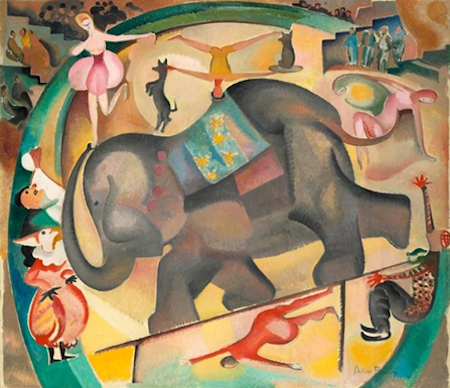
L'Elephant

Femme en rouge
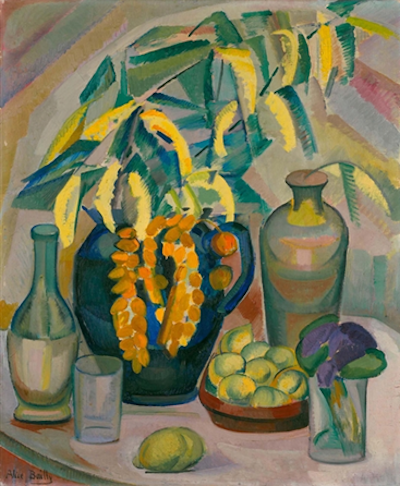
Nature mort aux mimosas
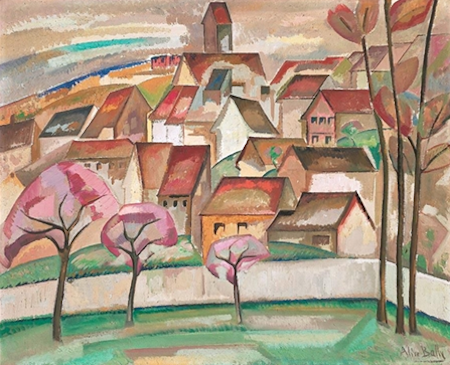
Le village
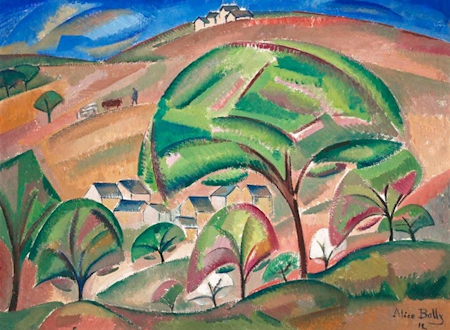
Paysage à Orsay (L'Arbre Vert)
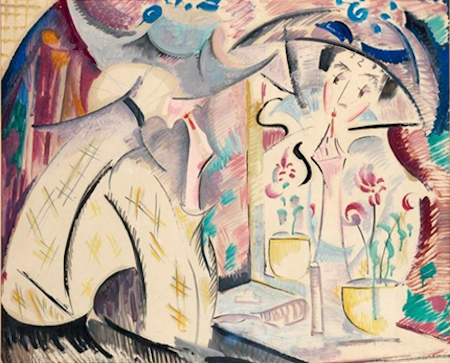
Femme au miroir
Alice Bailly (February 25, 1872 – January 1, 1938) was a radical Swiss painter, known for her interpretation of cubism and her multimedia wool paintings. Biography

Femme au gant blanc
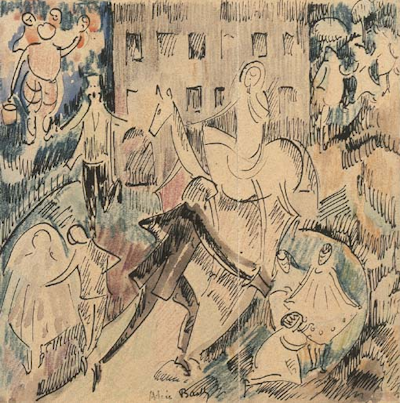
Hochzeitsfest
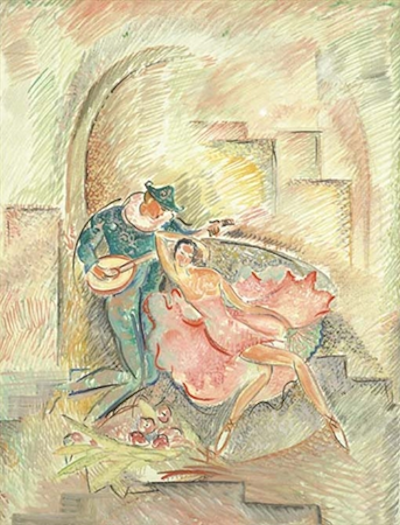
Arlequin et femme
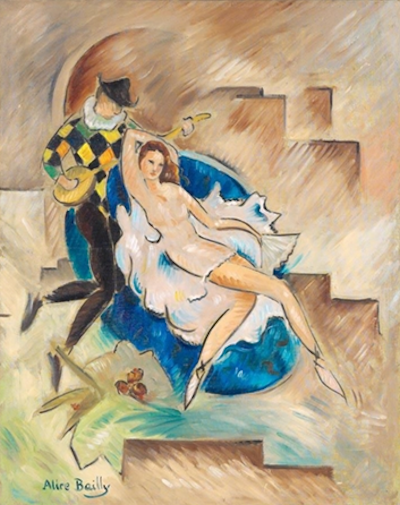
Danseuse avec arliquin
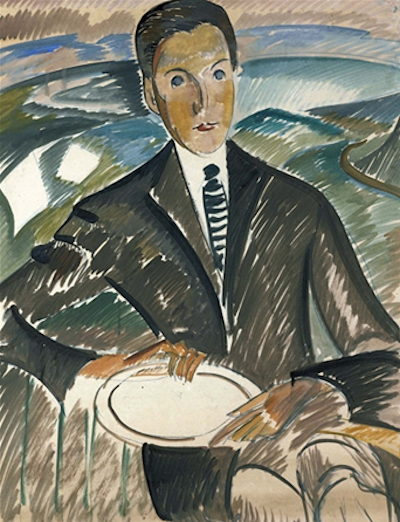
Portrait d'un jeune homme
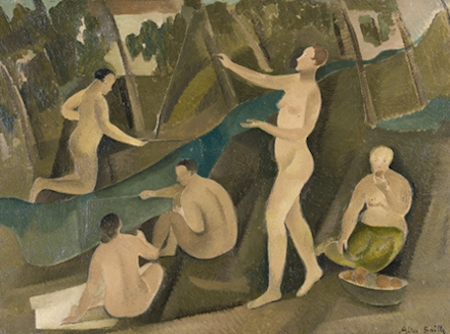
Au bord du ruisseau

© Bernard Buffet, 1956
Dictation, often largely adopted as a method of teaching, is really only a method of testing spelling. A child who makes no mistakes learns nothing from it. Still, dictation, employed, like oral spelling, with moderation and intelligence, is a useful and necessary exercise. It may be made an incentive for the careful study of all the hard words in a given 'piece,' and it shows what pupils and what words call for special attention.
Having selected the passage to be dictated, the teacher reads it aloud. A knowledge of the meaning of the whole will help the childdren to catch the sound of each separate word, and to decide between the different spellings by which the same sound is sometimes represented.
The passage is then dictated in sections of from two to six words, according to the age of the children and to the sense. The teacher should speak clearly enough for every one who is listening to hear and understand, and there should be, as a rule, no repetition. Children will not attend the first time if they think that there will be a second time. The rate of dictation should be regulated by watching a good writer of average speed. 'Copying' must be prevented by every means, moral and mechanical.
After the dictation comes the correction. If this be not thorough, the exercise is worse than valueless. A misspelling indicates a false impression of the form of a word, and this is deepened by iteration. Every mistake must, therefore, be discovered, and the correct spelling written a sufficient number of times to remove the false and imprint the true impression. The best method of correction is for the teacher to examine every exercise himself (the children, meanwhile, being usefully employed), but this is possible only with small classes. The method of mutual correction generally adopted is open to three objections—the corrector's own right spelling may be confused or wrong spelling confirmed by the mistakes of the corrected; errors may be passed over; and there is a constant temptation for the child to look at his own exercise instead of the one before him. This temptation can be largely overcome by good discipline, and entirely obviated by a simple device. The child at the upper end of each row of desks takes his own book (or slate) and that of his neighbour to the lower end of the row; the remaining books (or slates) are then passed up two places.
A better plan than mutual correction is for each child to correct his own, but this can be followed only when the training in honesty and carefulness has been successful.
Whatever method is adopted for marking errors, all words misspelled should be written accurately several times. While this is being done some pleasant occupation should be found for the children who have no errors, and the teacher should go round the class glancing at each exercise, and more than glancing at the exercises of children likely to have many errors.
A note should be made of the words misspelled, and after a few days they should be dictated again, for it must be remembered that memory impressions are deepened by interest or by repetition, and, as spelling cannot often be made interesting, repetition is essential.
(From The Art of Teaching by David Salmon, 1898)
The Dictation Day by Day/Modern Speller Series
Suggestions to Teachers: One dictation exercise constitues a day's lesson; but, in addition, assign three or four words from the review lists which follow every fourth lesson. When the four dictations and the review have been taught, review the week's work and teach no new matter. Keep a list of the words misspelled daily, and on Friday drill on these.
- The Modern Speller, Book 1 by Kate van Wagenen
- The Modern Speller, Book 2 by Kate van Wagenen
- Dictation Day by Day, A Modern Speller, 3rd Year by Kate van Wagenen
- Dictation Day by Day, A Modern Speller: 4th Year by Kate van Wagenen
- Dictation Day by Day, A Modern Speller: 5th Year by Kate van Wagenen
- Dictation Day by Day, A Modern Speller: 6th Year by Kate van Wagenen
Subscribe to:
Posts (Atom)