


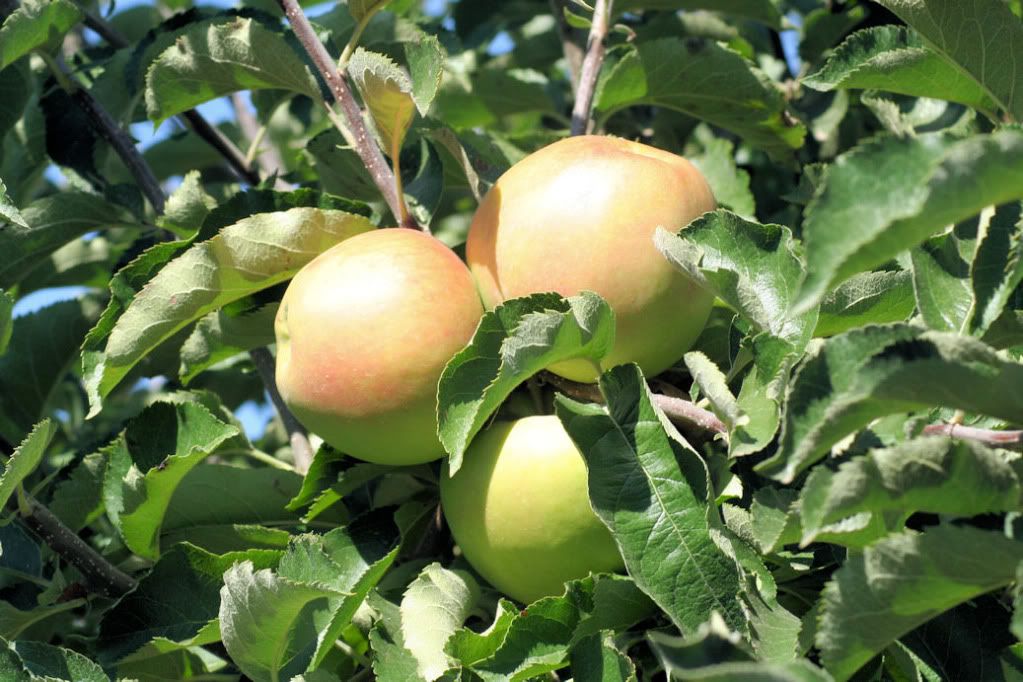
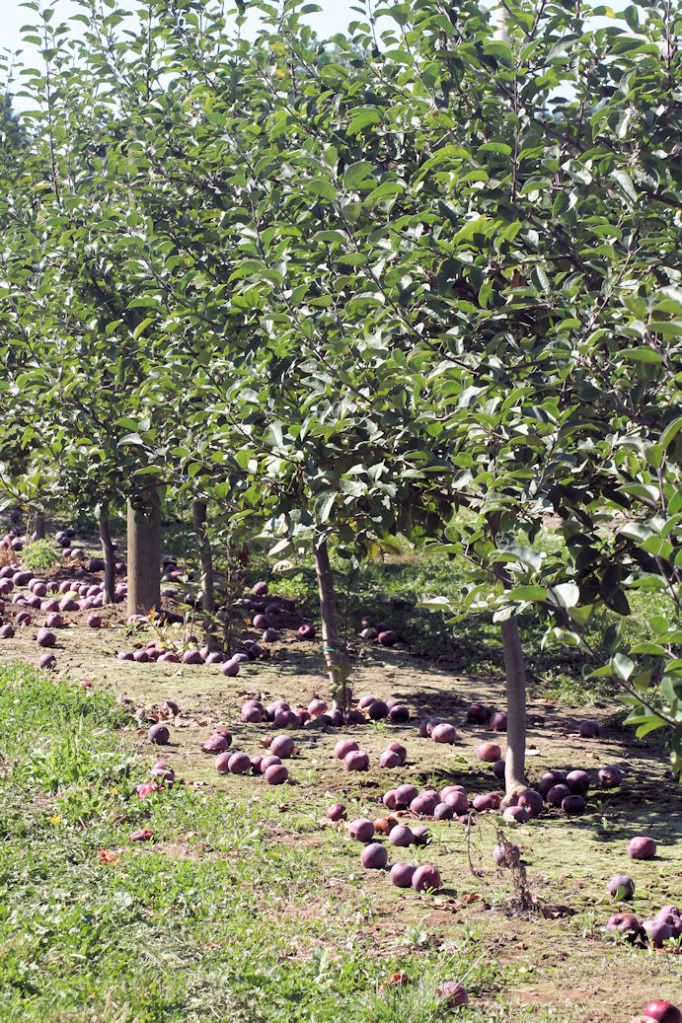
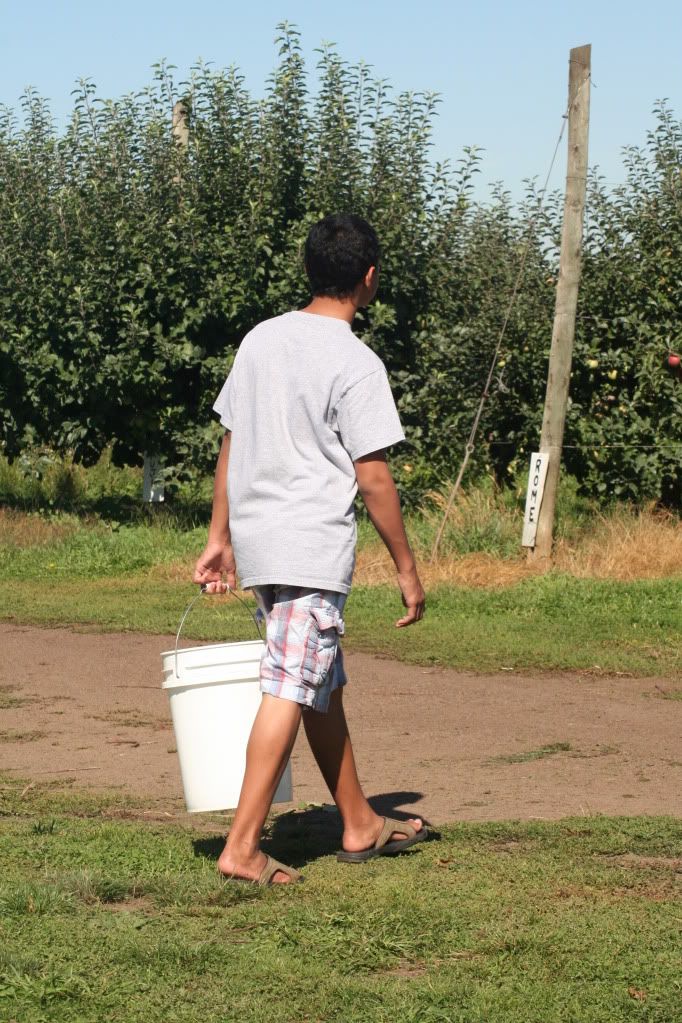
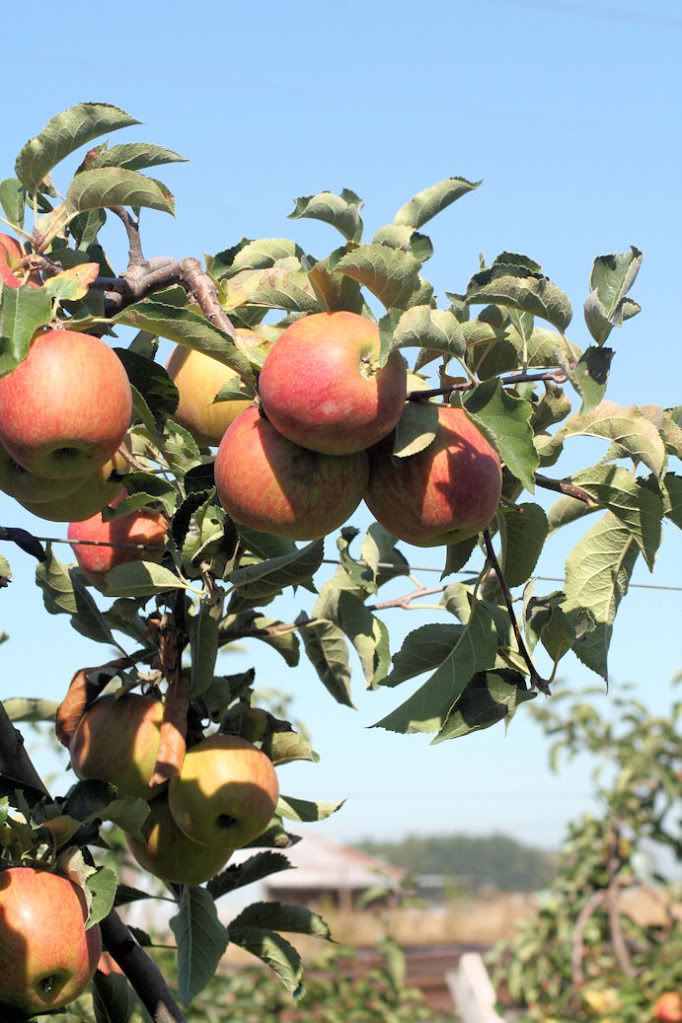
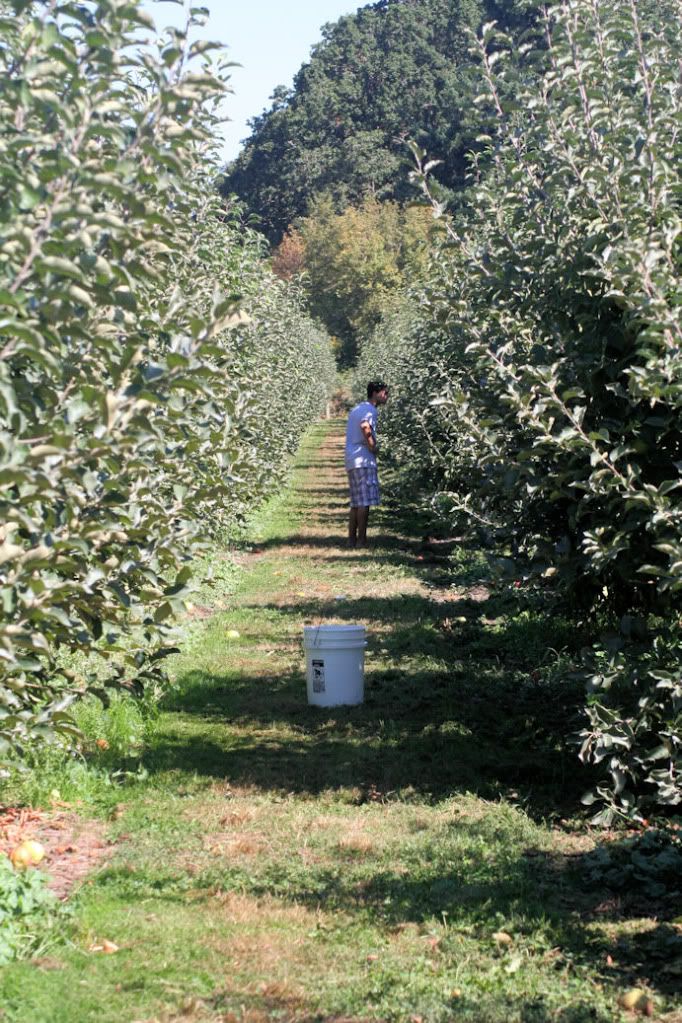
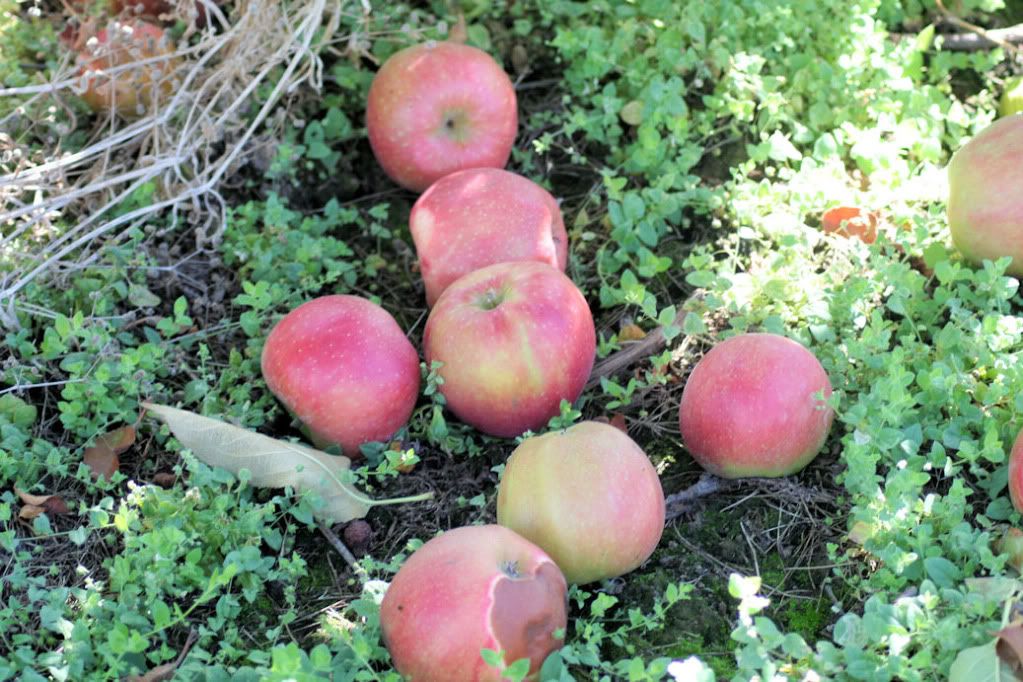
Photos from a recent apple picking excursion at Beilke Family Farms near Salem, OR (we picked approximately 66 pounds of RubyMac, Honeycrisp, Jonagold, Gala and Golden Delicious apples):

This was our second week of school and we are not off to a good start. Last week, I managed three solid days of school work despite our fire on Labor Day, but this week my whole world fell apart. On Wednesday afternoon I received a call from the restoration company hired to repair the fire damage. They informed me that ALL of our property has been "contaminated" by the fire and said that everything in the house would have to be packed up and moved out. Some of the contaminated property could be professionally cleaned (if our insurance will cover it, which is still uncertain) while the rest had to be disposed of and/or replaced. He also told me that we would not be able to live in the house for several weeks while the work is being done and would need to find someplace else to stay. Further, if our property is not cleaned and/or disposed of, we would not be allowed to move it back into the house because we would re-contaminate it. Given that we just barely got settled into the house, after so many months of careful packing and planning, this is all quite a shock.
Religion
This week we read the first chapter in Faith and Life: Following Christ (again) and completed the corresponding Activity Book pages. The kids also read the first four chapters of Saint Dominic: Preacher of the Rosary and Founder of the Dominican Order by Mary Fabyan Windeatt and we worked through most of the Race for Heaven Study Guide questions and activities. Lastly, the kids read the first two chapters of Ignatius Schuster's Illustrated Bible History and answered the chapter questions.
History
Our week began with a field trip to the World Forestry Center Discovery Museum. In trying to fill a gap in our history reading next week, I had considered assigning a book that I'd seen on other middle school reading lists- The Trees by Conrad Richter. The forestry museum seemed like a good tie-in with the book. However, after pre-reading the book on Tuesday (after our museum visit), I decided that it should probably wait until high school, though it is an engrossing book that I enjoyed. That being said, the museum was a bit of a disappointment anyway and wasn't quite what I'd imagined.
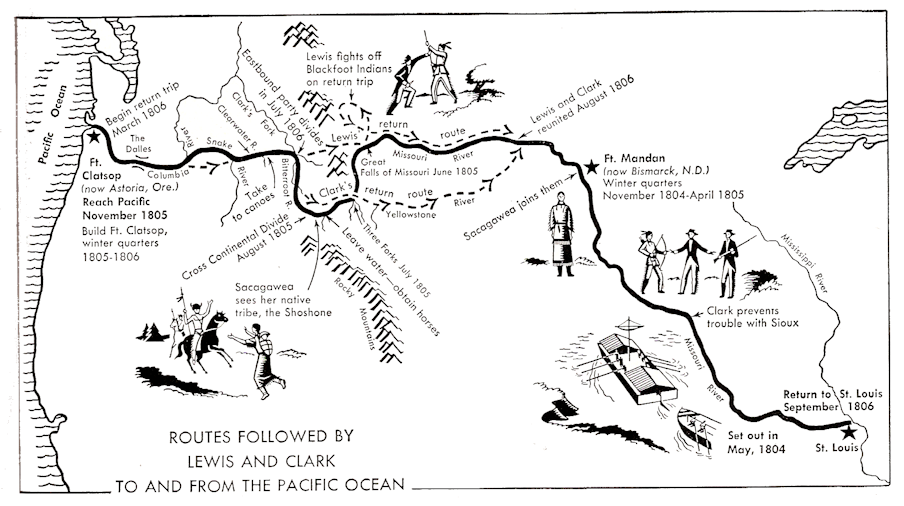
To compensate for the museum, we took the beautiful Columbia River Highway to Multnomah Falls - the second highest year-round waterfall in the United States and a place where Lewis and Clark camped twice on their expedition (in November, 1805 and again in April, 1806). We read the applicable journal entries by Lewis and then the boys ran (literally - where do they find the energy?!) to the top of the falls, while M and I only managed to hike halfway.
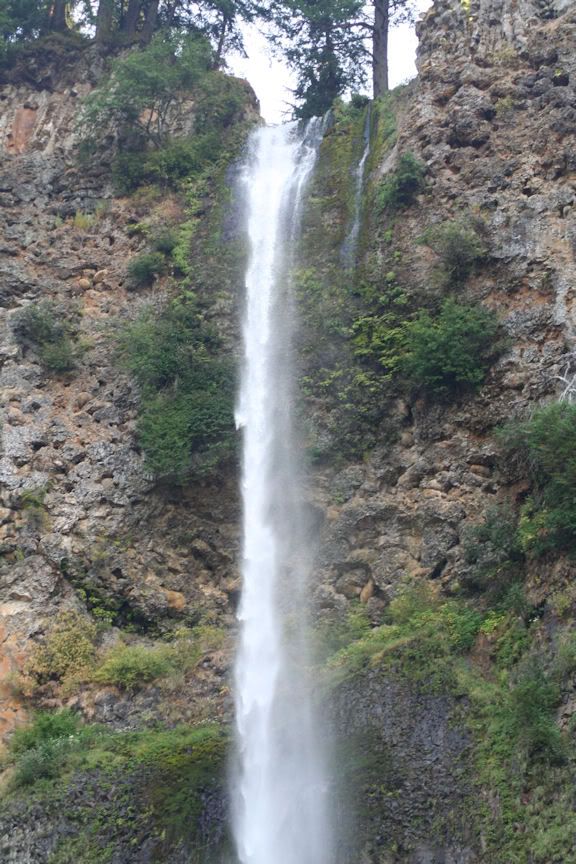
Multnomah Falls
Field trips aside, history was probably our slowest subject overall this week, but this is mainly because I've stretched my scheduling of our spine out ridiculously so that it will last us another two years. It's the kids' least favorite subject (but my favorite) and since I usually include tons of extras and get easily distracted by rabbit trails, I wanted to have time for everything without overwhelming them. Since this week fell apart, not a lot got done:
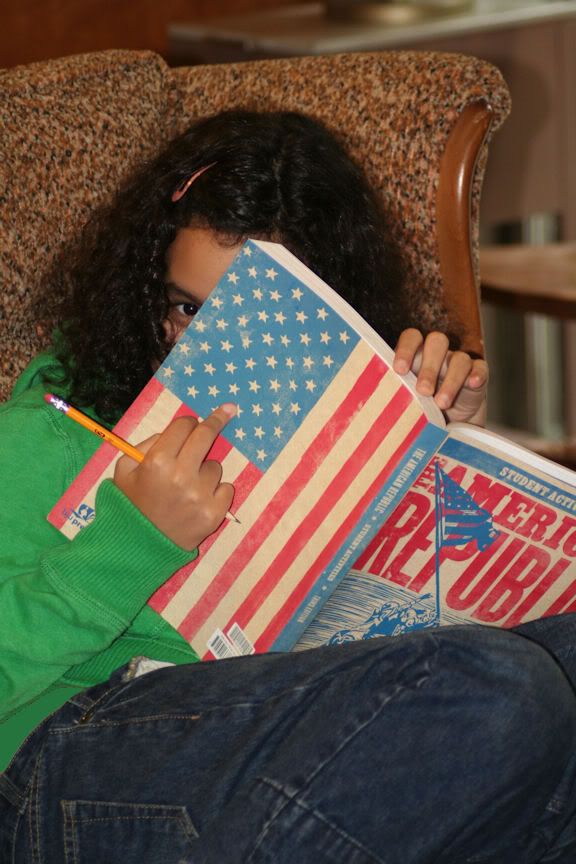
- One assignment in their American Republic Student Activity Manual ("The Journals of Lewis and Clark")
- Watched the second half of Lewis and Clark: The Journey of the Corps of Discovery on Netflix Instant
- Finished reading their biographies of Lewis and Clark. M read The Lewis and Clark Expedition by Carol A. Johmann, while J chose to switch to Lewis and Clark: Blazing a Trail West by John Burrows.
- Lessons 2 and part of 3 from the Time Travelers Early 19th Century CD: Westward Weekly newspaper and Growth of the Nation map (we skipped the field book project).
- Read 'Hasty Pudding' by Cornelia Meigs and 'Johnny Appleseed's Coat' by Mabel Leigh Hunt, both from The Children's Hour, Vol. 11: Along Blazed Trails (©1953).
Language Arts
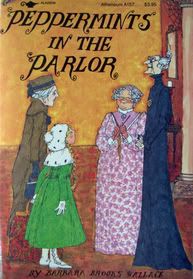 This week, M finished up Peppermints in the Parlor by Barbara Brooks Wallace (her free reading selection), a book that I loved at her age and was recently reminded of after browsing through one of Don Killgallon's books. She enjoyed the book so much that she promptly started on the sequel, The Peril of Peppermints. J read through two Naruto [manga] books that he picked up at the library.
For Literature, M read Alice's Adventures in Wonderland by Lewis Carroll for four days this week (30 minutes per day); we're loosely using the MCT literature guide for discussion. On Friday, she also began reading from The Other Alice: The Story of Alice Liddell and Alice in Wonderland, a nonfiction book by Christina Björk and Inga-Karin Eriksson. (For older students or adults, I highly recommend Alice I Have Been: A Novel by Melanie Benjamin!)
Despite all of my big plans for J's reading this year, I ended up placing him in a literature class at a local community learning center. I knew the class would be challenging, but I really had no idea it'd be so challenging (especially for someone who only enjoys reading manga). His book list this year include A Tale of Two Cities, David Copperfield, Pride and Prejudice, and Slaughterhouse Five. This week's assignment was to read two chapters per day of A Tale of Two Cities. He was not understanding the book at all, so I broke down and bought him the Cliff Notes. Now, he reads a chapter in the book, followed by the Cliff Notes summary and seems to be doing just fine. We'll see how it goes.
For Grammar, we only managed 10 pages of Grammar Town and four chapters of Grammar-Land (plus the corresponding worksheets); there was no poetry this week.
This was our first week using Susan Wise Bauer's Writing with Skill for Composition and it went surprisingly well. M had a major meltdown on Day 2 (she's such a detail person, summarizing is really hard for her), but pulled it together for the rest of the week and even did a great job on Day 4 which was a longer "challenge" assignment.
Art
This week the kids attended their first drawing class at the community learning center where I've enrolled them part-time (for 2 classes apiece). They both enjoyed it very much and are looking forward to next week.
We did not start a new lesson in art this week, but rather continued with the project we missed last week: a One-Line Abstract Drawing in the style of Paul Klee (this was from Discovering Great Artists by MaryAnn F. Kohl and Kim Solga). We reviewed some of Klee's work before jumping into the project and ended up spending two days on it.
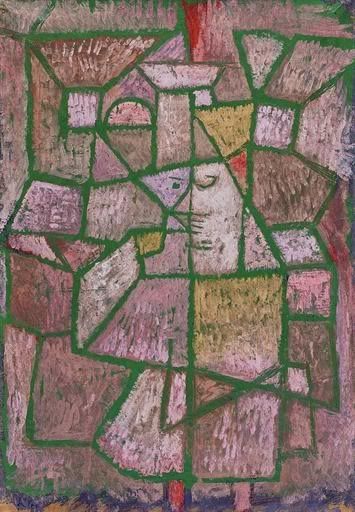
Herr der Stadt (Master of the Town), Oil on paper by Paul Klee, 1937
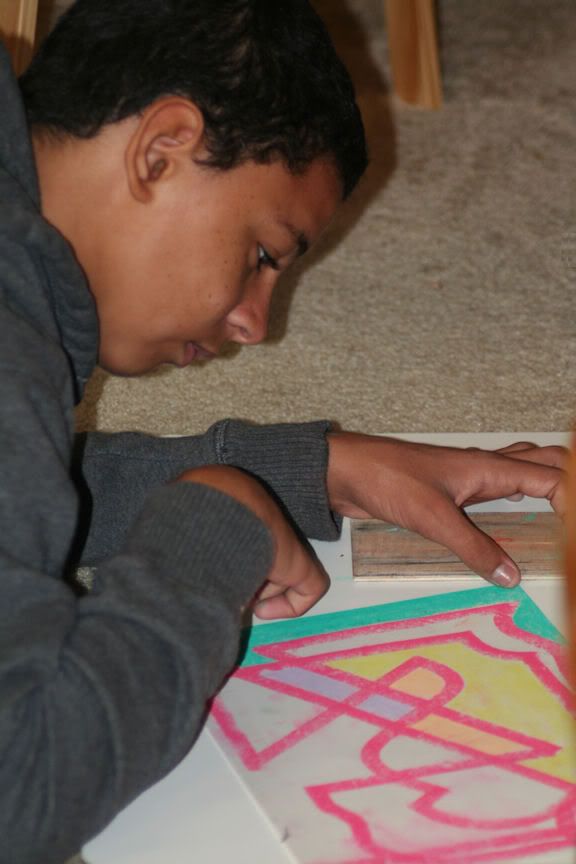
J - hard at work
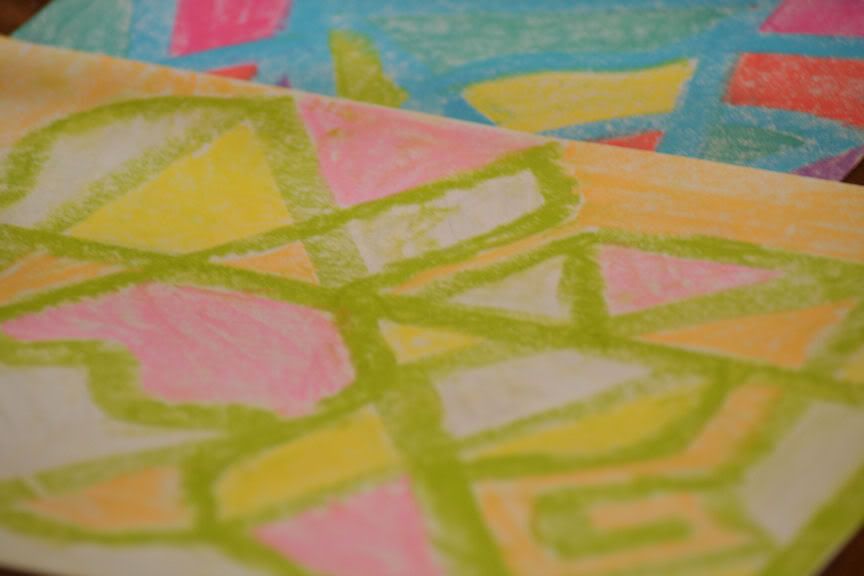
M's work
We also briefly studied the contemporary one-line drawings of Nissim Ben Aderet and watched this interview with the artist.
Other
The kids completed two worksheet pages per day from Building Thinking Skills and did some math review worksheets all week, in addition to 45 minutes per day of Khan Academy. I finally got M's math curriculum ordered, Teaching Textbooks Math 6, so we should have that for next week.
In science, we wrapped up Chapter 1 of CPO's Focus on Life Science. Despite the fact that M has been complaining for two weeks that the book is too hard, she did very well on the chapter assessment. We'll probably need to take a short break from science until we're settled back in the house again. There are a number of experiments coming up and I can't see attempting them from a motel room.
For geography, the kids had two lessons from Maps, Charts and Graphs, Level D and worked on their second Geography and Culture task card. They did some additional reading about maps and globes and made maps of their bedroom.
M and I were not able to start French this week because the resources I'd ordered from Amazon.fr were delayed in arriving. Since they finally showed up last night, we'll be able to start French next week.
J continues to work on Hiragana for Japanese I, but really needs a tutor and is not making much progress. Again, I'm thinking this will have to wait until everything is settled with the house first.
This was our first week back to school and what a week it was. On Monday, we were enjoying the Labor Day holiday when a grease fire broke out in the kitchen of our new house and spread to the dining room. Below are just a few photos of the damage; both rooms are a disaster with blackened cabinets, blistered floors and walls, melted light fixtures, etc. Further, my husband suffered deep second degree burns on his right hand and arm, and second degree burns on his left arm and face. We were told repeatedly that we were very lucky the fire and injuries weren't so much worse, but still, not a great way to start the week (to say the very least!).


Sadly, we had just purchased a set of eight gorgeous [vintage] Danish modern chairs that matched our dining room table and both the table and four of the chairs were burned. However, this afternoon I received a custom-made oilcloth tablecloth that I ordered from Modern June last month (thinking to protect the table if we did schoolwork there), so at least the top of the table can be concealed until we have it refinished. It is very cheery, isn't it? (The polka dotted oilcloth is just a decorative wrap.)
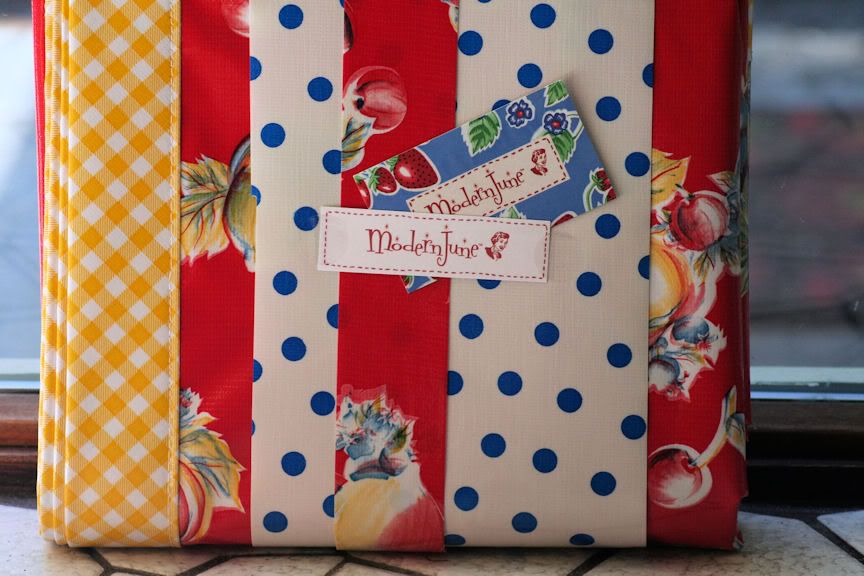
New oilcloth tablecloth by Modern June
Tuesday was supposed to have been our first day of school, but since I was at the burn center with my husband, school was postponed until Wednesday. Thank goodness for Homeschool Skedtrack because juggling assignments was much easier than it would have been with my old system! Nevertheless, it sucks starting the school year off-schedule!
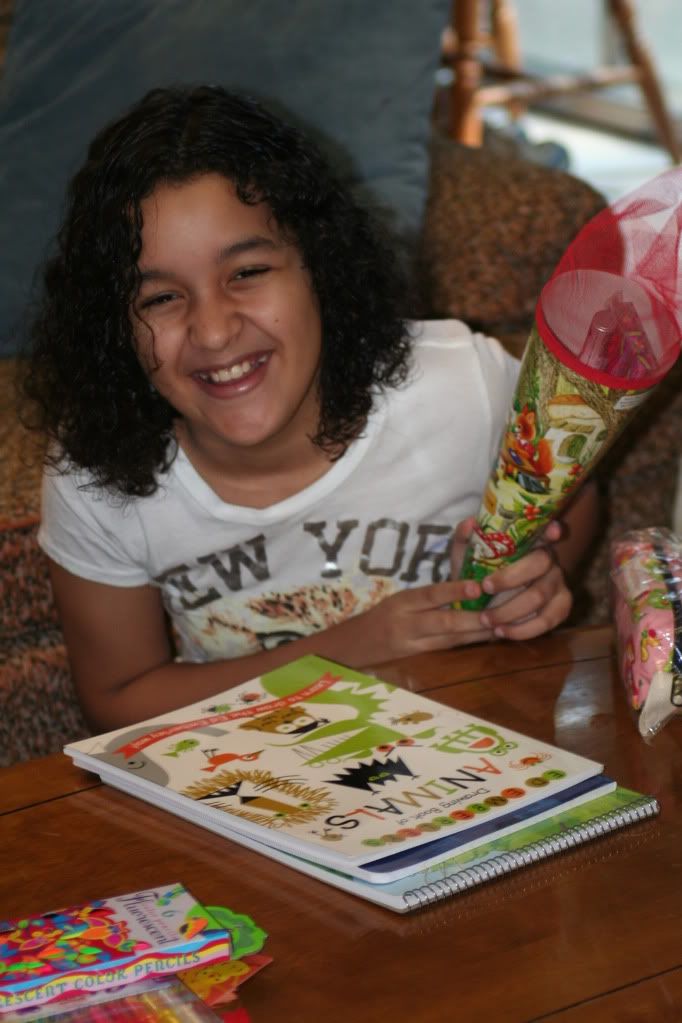
For our first day, we revisited the schultüte (school cone) tradition of past years; here's M with hers:
We kept things pretty simple this week because I didn't want to jump into a full schedule right away (and to be perfectly honest, I wasn't quite prepared!). Despite this, we still averaged 6 hours of school per day, which has me very fearful for next week. This is roughly what we'll be covering this year (click on the image to enlarge):
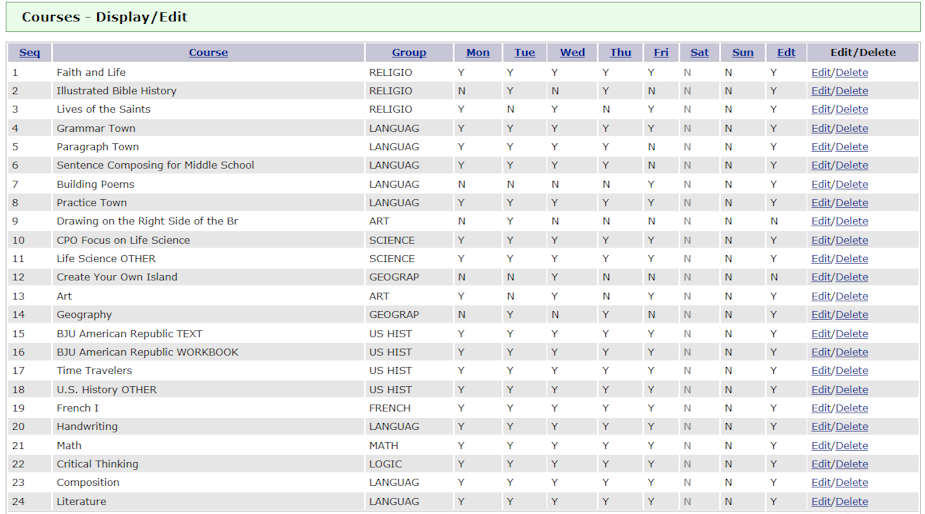
It's scheduled to average 7-8 hours per day (9 hours a day on the two days per week that they'll have outside classes) and that seems like too much, yet this week we only managed a fraction of the work and it took 6 hours?! Yikes! One thing I'll be doing differently next week is borrowing this genius timer idea from Satori Smiles; I've already utilized her clipboard idea and love that it completely eliminates lost schedules!
Language Arts
 Grammar was largely parts of speech review (nouns, pronouns and articles). We read the first twenty-four pages of Michael Clay Thompson's Grammar Town as well as four chapters from Grammar-Land by M.L. Nesbitt. The kids completed Grammar Land worksheets for the chapters read.
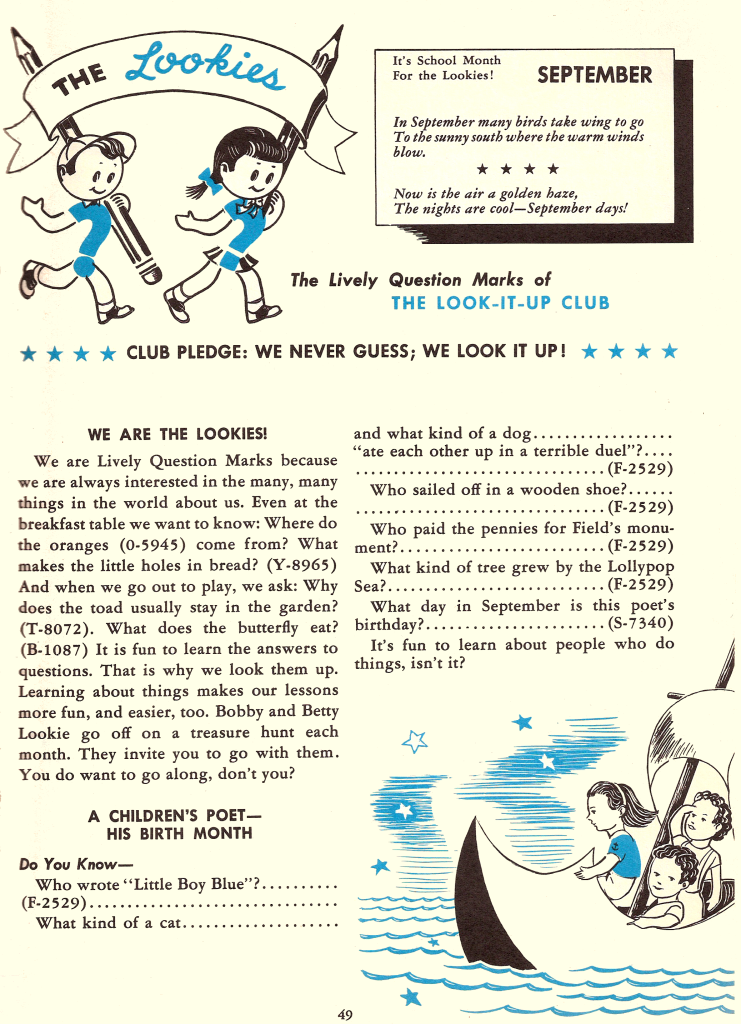
 For our poetry study, we read a number of poems by Eugene Field (who was born on September 2, 1850). The kids also completed a fun research page (see below; click on image for full-size) on Fields from The Lookies. The Lookies was an annual bulletin for children published by Field Enterprises from 1949 through the 1970s. It was designed to be used with World Book Encyclopedias.
Science
The kids read sections 1.1 (units of measurement) and 1.2 (the scientific method) from Chapter 1 of CPO's Focus on Life Science and completed the corresponding "Skill and Practice" worksheets. They also read Millions to Measure by David M. Schwartz and did some research on Francisco Redi and spontaneous generation.
Geography
The kids completed one lesson from Maps, Charts and Graphs, Level D (we're not using the books in order) and their first Geography and Culture task card from Creek Edge Press. They also completed several geography notebook pages from the World Maps CD by Homeschool in the Woods. This week's task card was about maps and globes and assignments included filling out a black line world map, drawing a world map and learning various geography terms. While I love the task cards, the kids were less enthused. M, in particular, found them too open-ended and thus rather frustrating.
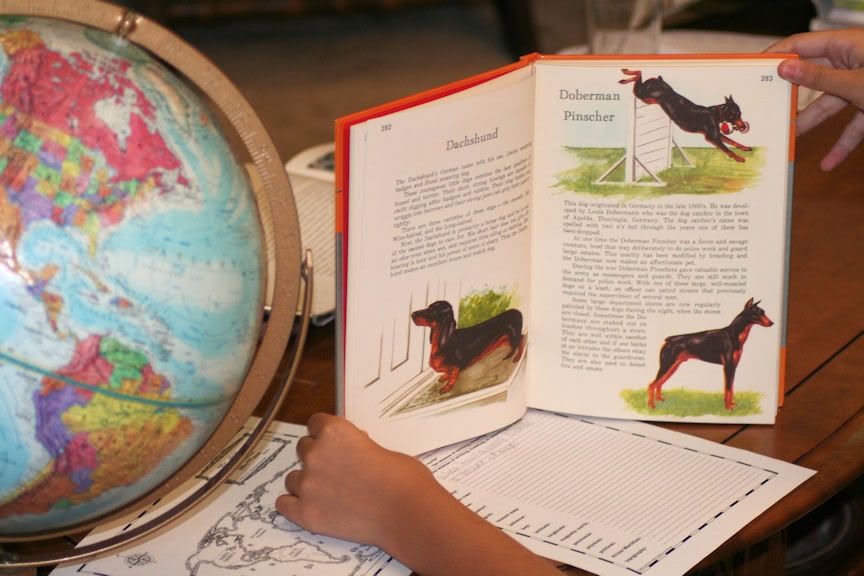
M got a little sidetracked while looking up geography terms...
Art
We only managed one day of art this week, and not a very exciting day at that. Typically, art and geography will be on alternate days with art occurring three times per week.
We read about how to look at art and the elements of art: line, shape, form, space, value, color, and texture. We then read Lesson 1 (Line) from Scott Foresman Art (6); the kids completed a sketchbook journal exercise, experimenting with various types of lines using various drawing tools. Next, we viewed and discussed a number of contour drawings by Matisse, then the kids created their own contour drawings. Because I would not let them look at their papers while drawing, this proved a frustrating exercise for them.
Studio 1: Contour Drawing:
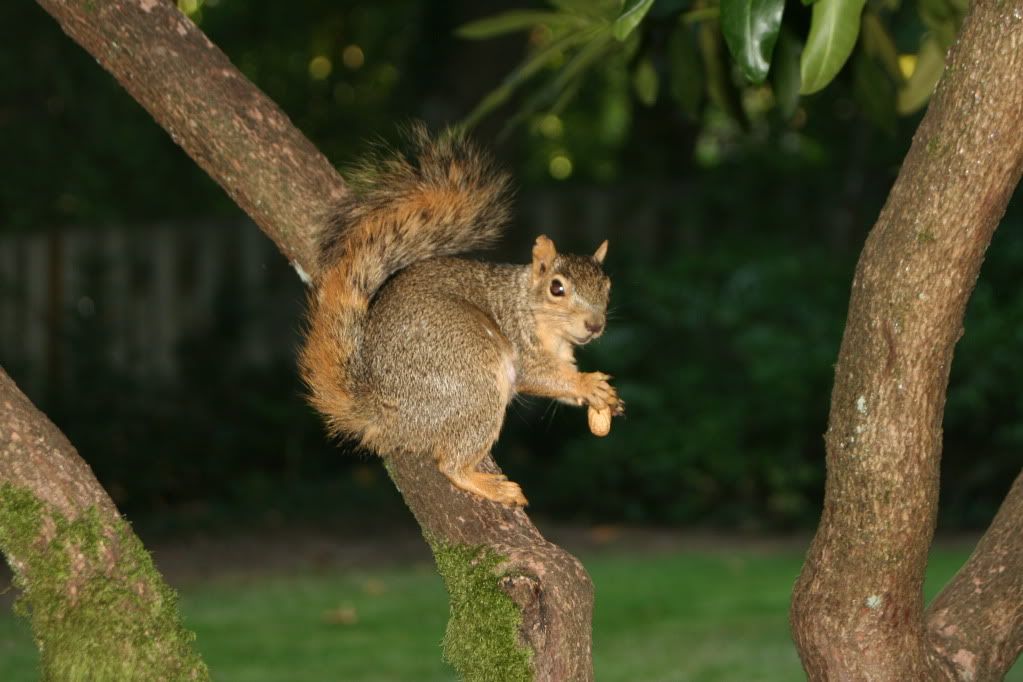
A squirrel on our patio
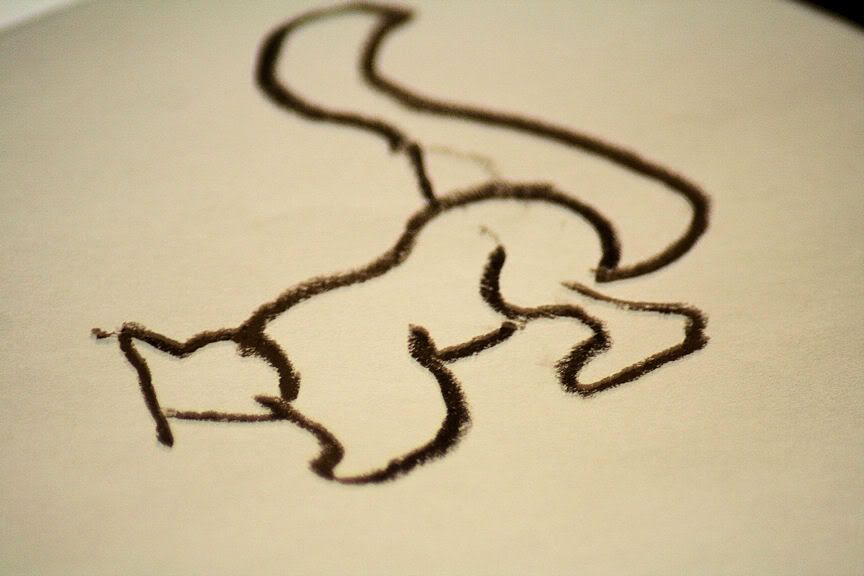
J's squirrel
History
As usual, history was our busiest subject this week. Here's what we did:
- Read about Thomas Jefferson, the Barbary Pirates, and Lewis and Clark in Chapter 9 of The American Republic (BJU) and completed the corresponding Student Activity Manual pages.
- Completed Lesson 1 from the Time Travelers Early 19th Century CD. Our projects were a foldout book on the Barbary Pirates, a 19th century songbook, and a timeline.
- Watched Lewis and Clark: The Journey of the Corps of Discovery on Netflix Instant.
- Began reading The Lewis and Clark Expedition by Carol A. Johmann (not the book I'd originally planned, but necessary given our condensed week)
- Completed five pages in the Lewis and Clark Discoveries on the Trail [activity book].
- Each child read a roughly 100-page biography of Thomas Jefferson and created a notebook entry summarizing his life. In the end, these weren't quite the summaries I had envisioned since they each wrote four pages!
Critical Thinking
The kids completed 4 pages from Building Thinking Skills.
Next week, I hope to be adding religion, math and foreign language(s) into our schedule, in addition to handwriting, literature and composition. Wish me luck!
M. has decided that she would like to begin to learn French this year (which is fortunate for me, since I know at least a little of the language!). After some research, I settled on Galore Park's So You Really Want To Learn French as her primary text for the subject. However, I knew that I'd also want to supplement with some French texts intended for French children learning to read the language. Additional research led me to two different sets of books: Méthode Boscher and Daniel et Valérie, both of which are time-proven and use the syllabic method of reading (a very brief discussion of syllabic phonics vs. the "global method" can be found on TWTM here.). While both texts are a touch old-fashioned, in my opinion the charm of the illustrations more than compensates.
Here are the resources available for Méthode Boscher:

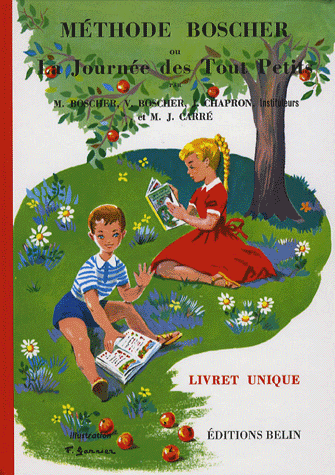
Méthode Boscher ou La Journée des Tout Petits is the primary text for the illustrated syllabic method of reading and writing first developed by Mathurin Boscher in 1906. The two books shown above have both been reprinted by Belin and are identical, with the exception of the illustrations. The "green version" was illustrated by Jacqueline Duché in 1915 (more about her work here) and the "red version" was illustrated by François Garnier in 1945. Preview and/or download the entire "red version" book here at Scrib'd. The "red version" is available for purchase from Amazon.fr, while the "green version" is available from Amazon.ca.
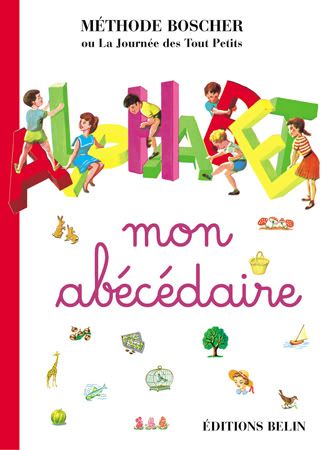
Méthode Boscher mon abécédaire is an alphabet book which also contains simple vocabulary. Preview and/or download the entire book at Scrib'd. Ages 4+.
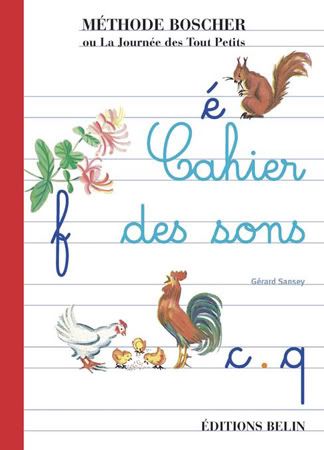
Méthode Boscher Cahier des sons is the pre-reading workbook of syllabic sounds. Preview and/or download the entire book at Scrib'd. Ages 4+.

Méthode Boscher Cahier de graphisme is the pre-writing workbook which contains exercises that allows the child to master the movement of the letters before moving on to the copybook below. This is especially helpful if you'll be using a fountain pen for cursive. Preview and/or download the entire book at Scrib'd. Ages 4+.
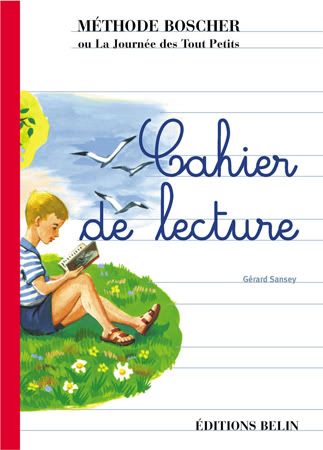
Méthode Boscher Cahier de lecture is the primary workbook for the main text Méthod Boscher ou La Journée des Tout Petits. Preview and/or download the entire book at Scrib'd. Ages 5+.
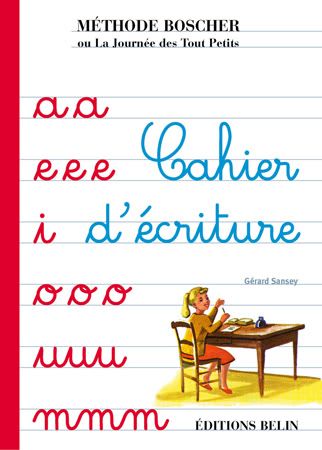
Méthode Boscher Cahier d'écriture is a cursive copybook which contains both uppercase and lowercase letters. Each page has a corresponding page in the primary text, Méthod Boscher ou La Journée des Tout Petits. Preview and/or download the entire book at Scrib'd. Ages 5+.
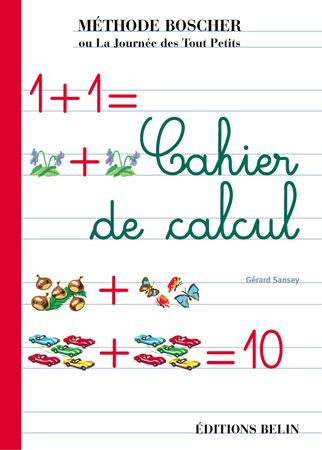
Méthode Boscher Cahier de calcul is a math workbook which contains numbers from 0 to 100, plus simple addition and subtraction. Preview and/or download the entire book at Scrib'd. Ages 5+.
Leveled Méthode Boscher readers online:
- Book 1: Paco, le petit matelot
- Book 2: [ Missing ]
- Book 3: Paco a trouvé un ami
- Book 4: Sur le bord du lac
- Book 5: Une promenade dans la campagne
- Book 6: Une journée bien remplie

2011-12 U.S. History: First Semester Reading (Westward Expansion)
0 comments Posted by Kristine at 8/30/2011 04:09:00 PM1. Lewis and Clark: Blazing a Trail West by John Burrows (nonfiction)
2. Diary of an Early American Boy: Noah Blake, 1805 by Eric Sloane
3. Hello, the Boat! by Phyllis Crawford (1939 Newberry Honor book)
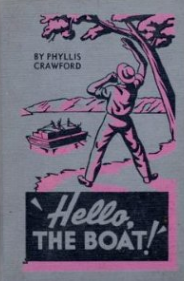
Combining accurate information about those days of tall tales and tall language with a truly spontaneous story, "Hello, the Boat!" recreates the life of young people of another day in a humorously realistic fashion. Remote from great national events, the narrative is extremely simple yet vivid, absorbing because of its truth." (via GoodReads)
We'll be supplementing Hello, the Boat with the excellent nonfiction Flatboat Days on Frontier Rivers by James McCague (part of the Garrard History Series). Two additional options I considered were By Wagon and Flatboat by Enid La Monte Meadowcroft (also very good, according to TruthQuest) and Flatboats and Wagon Wheels by Mildred Comfort.
4. Boy with a Pack by Stephen Meader (1940 Newberry Honor book)
"Seventeen-year-old Bill Crawford refused to be licked by the "hard times" of 1837. Putting every cent he owned into a tin trunk full of "Yankee notions," he set out afoot from New Hampshire for the Ohio country. His adventures on the road, as he crossed Vermont, York State, and Pennsylvania and moved southward through Ohio, furnished abundant tests of his courage and character. A crooked Vermont horse dealer who nearly murdered Bill for his trade-goods; a bullying Erie canal boat captain who hired him as a driver; and a hard-riding Virginia slave-catcher shadowing the Underground Railroad are vivid personalities in the story. Like other popular books by this author, Boy With A Pack is a horsy story. It is flavored with the racy pungency of stagecoaches and tavern stables, the brawl and bustle of the old Erie Canal, the excitement of backwoods trotting tracks, and the dusty plodding of westward migration in full tide a hundred years ago."
5. Apple Tree Cottage by Virginia Frances Voight
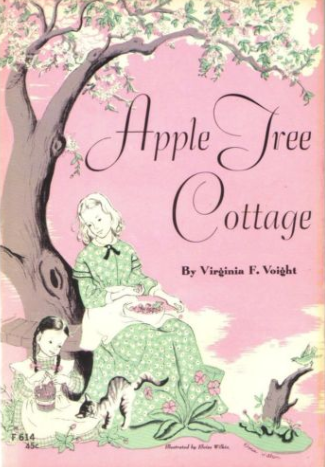
They also become involved in the burglary case of Mr. Bramble, a rich patron of the Warren's father. Susan witnesses the robbers escaping the night before the Warrens settle at Apple Tree Cottage. Candy spots a silver William Penn porringer in the road, part of the robbers' loot, which she uses to feed her new kitten Winkie. There are descriptions of pastoral life in the mid-1800's, the countryside, chores, cooking, and picnics and an account of the railway and city when Susan travels with Phil on the quest to earn money for rent ($2 a month) and necessities. Being the talented daughter of an artist, she is looking for work with the famous Godey's Lady Book to paint fashion plates in watercolor. A simple but delightful read." (Source)
6. The Story of Davy Crockett by Enid LaMonte Meadowcroft. We be supplementing this with chapters from Hunters Blaze the Trails by Edith McCall (Frontiers of America Series, reprinted by Royal Fireworks Press), and When Mountain Men Trapped Beaver by Richard Glendinning (Garrard History Series; non-fiction). I will also be reading aloud excerpts from Journal of a Trapper : or, Nine years in the Rocky Mountains, 1834-1843 by Osborne Russell (online here) for a true, first-person account of life as a "mountain man."
7. Lyddie by Katherine Patterson - My plans for this book are posted here.
8. The Great and Only Barnum: The Tremendous, Stupendous Life of Showman P. T. Barnum by Candace Fleming (nonfiction; corresponding film: P.T. Barnum)
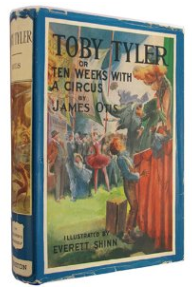
"Toby Tyler tells the story of a ten year-old orphan who runs away from a foster home to join the traveling circus only to discover his new employer is a cruel taskmaster. The difference between the romance of the circus from the outside and the reality as seen from the inside is graphically depicted. Toby's friend, Mr. Stubbs the chimpanzee, reinforces the consequences of what happens when one follows one's natural instincts rather than one's intellect and conscience, a central theme of the novel." (Source)
We'll be supplementing Toby Tyler with excerpts from Sawdust and Spangles: Stories and Secrets of the Circus, a 1901 memoir by W.C. Coup. (There is also a picture book version of Sawdust and Spangles by Ralph Covert; Coup was a contemporary of P.T. Barnum.) Additionally, we may read Circus Days Under the Big Top by Richard Glendinning (Garrard History Series) and select articles from Bandwagon (The Journal of the Circus Historical Society). We'll wrap up our unit by watching the Disney film "Toby Tyler".
10. On to Oregon by Honore Morrow (Film: "Seven Alone") and Tree Wagon by Evelyn Sibley Lampman OR The Pioneers Go West (Landmark Series) by George R. Stewart. I'll be reading aloud excerpts from Prairie Traveler: A Handbook for Overland Expeditions, with Maps, Illustrations, and Itineraries of the Principal Routes between the Mississippi and the Pacific by Randolph B. Marcy (1859). Marcy’s Prairie Traveler was an indispensable guide to thousands of American overlanders in their arduous treks to California, Oregon, Utah, and other western destinations, it's also very interesting reading!

1st Semester: Sentence Writing, 2nd Semester: Paragraphs
Six Traits of Writing Posters - Modify these to make my own *Move this to writing program page
1. Review the Parts of a Sentence (Parts of Speech).
- Glencoe Grammar and Language Workbook, Grade 7 (Free!)
- Unit 1: Subjects, Predicates and Sentences
- Unit 2: Nouns
- Unit 3: Verbs
- Unit 4: Pronouns
- Unit 5: Adjectives
- Unit 6: Adverbs
- Unit 7: Clauses and Complex Sentences
- Unit 8: Verbals (Participles, Participial Phrases, Gerunds and Gerund Phrases, Infinitives and Infinitive Phrases)
- Unit 9: Subject-Verb Agreement
- Unit 10: Diagramming Sentences
- The Art of Styling Sentences by Ann Longknife, Ph.D. and K.D. Sullivan
- Chapter 1: The Sentence
- Writers Inc. by Patrick Sebranek, Dave Kemper, and Verne Meyer
- Understanding the Basics, p. 86
- Inverted Order, p. 86
- Writing Complete Sentences, p. 87-88
- Sentence Composing for Middle School by Don Killgallon (See also: The Grammar for Middle School Teacher's Guide)
- Part 1: Sentence Unscrambling, Activities 1-8
- Board Game: Cooking Up Sentences
- The Art of Styling Sentences by Ann Longknife, Ph.D. and K.D. Sullivan
- Chapter 2: The Twenty Patterns (20 Patterns from the Art of Styling Sentences)
- Pattern 1A, 1B, 1C (Exercises 1-3)
- Pattern 2 (Exercises 1-4)
- Pattern 3 (Exercises 1-5)
- Pattern 4 (Sentences for Analysis 1-3, Exercises 1-5)
- Pattern 4A (Sentences for Analysis 1-3, Exercises 1-5, 1-3)
- Pattern 5 (Exercises 1-4, 1-3)
- Pattern 6 (Exercises 1-3, 1-2)
- Pattern 7 (Exercises 1-3, 1-4)
- Pattern 7A (Exercises 1-5, 1-3)
- Pattern 8 (Exercises 1-5)
- Pattern 9 (Exercises 1-3, 1-2)
- Pattern 9A (Exercieses 1-3)
- Pattern 10 (Sentence for analysis, Exercises -5)
- Pattern 10A (Exercises 1-2, 1-2)
- Writers Inc. by Patrick Sebranek, Dave Kemper, and Verne Meyer
- Writing Clear Sentences, p. 89-90
- Writing Natural Sentences, p. 91-92
- Writing Acceptable Sentences, p. 93-94
- Combining Sentences, p. 95
- Modeling Sentences, p. 96
- Expanding Sentences, p. 97
- Sentence-Writing Tips, p. 98
- Methods and Materials for Composition in Intermediate and Grammar Grades by Alhambra Georgia Denning (Free!)
- The Art of Styling Sentences by Ann Longknife, Ph.D. and K.D. Sullivan
- Chapter 4
- Word Painting: A Guide to Write More Descriptively by Rebecca McClanahan
* For sentence composing practice, "You've Been Sentenced" board game (expansion decks also available).
Books
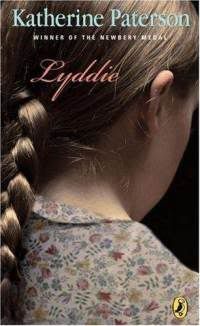
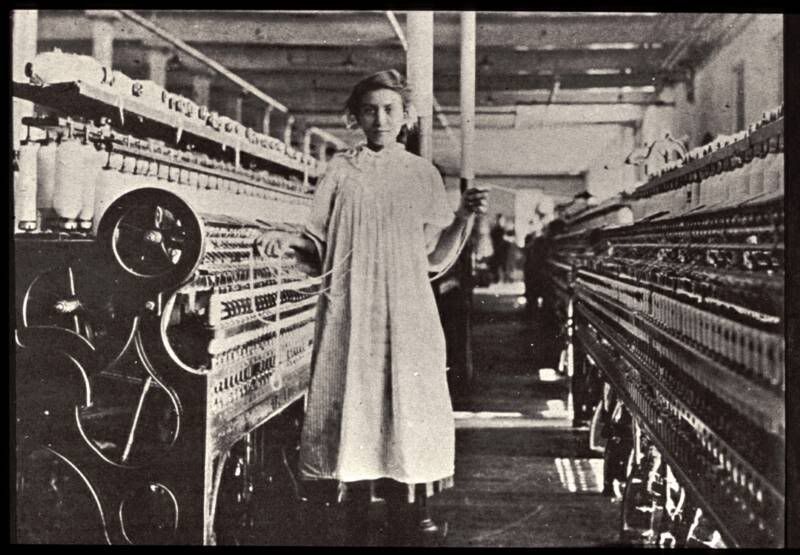
- Lyddie by Katherine Patterson (historical fiction based on factual accounts of Lowell's mill girls)
- Lyddie Comprehension Questions
- Lyddie Discussion Questions
- Work, Earnings and Economics: Using 'Lyddie' by Katherine Patterson
- The Lowell Mill Girls by Alice K. Flanagan
- Kids on Strike! by Susan Campbell Bartoletti, Chapter 1 (J331.892 BAR)
- Mill by David Macaulay
- [Primary Source] Loom and Spindle, or, Life Among the Early Mill Girls by Harriet Hanson Robinson (excellent!)
- [Primary Source] A New England Girlhood by Lucy Larcom
- The Beginning of a Revolution: Waltham and the Boston Manufacturing Company, from The Concord Review: A good overview on how the mills began and their lasting impact. (17 pgs; PDF)
- Center for Lowell History: Mill Life in Lowell 1820-1880
- Lowell Notes Handout on Lucy Larcom (.PDF)
- Lowell Mill Girl Interactive Activity
- Questions for Pondering About the Lowell Mill Girls
- Women and Factory Labor Lesson Plan utilizes Harriet Robinson's account of mill life (see above).
- The Mill Girls and Immigrants Exhibit (.PDF) from the National Parks Service contains information on the Lowell mill boardinghouses
- Industrial Archaeology: Living on the Boott: An interesting article about excavation at the site of Boott Cotton Mills boardinghouses in Lowell, excerpted from the book "Living on the Boott": Historical Archaeology at the Boott Mills Boardinghouses, Lowell, Massachusetts, by Stephen A. Mrozowski, Grace H. Ziesing, and Mary C. Beaudry.

- Boarding House Rules from the Handbook to Lowell, 1848 (.PDF)
- Documents of Mill Life (.PDF)
- Lowell and Its Factory System, 1842, by Charles Dickens (.PDF)
- A personal account of the 1836 strikes, an excerpt from Loom and Spindle, or, Life Among the Early Mill Girls by Harriet Hanson Robinson.
- The Lowell Offering a monthly literary magazine produced by the mill girls (more about the magazine can be found in Chapter 10 of A New England Girlhood)
- Excerpts of A New England Girlhood by poet Lucy Larcom.
Subscribe to:
Posts (Atom)


