


Rose’s parents hoped that she would get married, but Rose wanted to give her life completely to God. She told her parents that her dream was to join the convent to become a nun, but they would not give her permission. They needed Rose at home, helping to support the family.
Rose moved into a hut in the garden. She earned money by selling her flowers during the day. At night she did needlework, making designs with colorful threads on cloth. People bought the clothing she decorated. With the money she earned, Rose helped her family and also bought food for the needy people in her community. She put her prayers into action. With help from her brother, she added rooms to her hut and cared for homeless children and the elderly. She became a much-loved woman everywhere in her country.
 We honor Rose of Lima on August 23. She was the first person from the New World—the Americas—to be named a saint. Rose’s life teaches us to reach out to our neighbor and to use our talents to help them live better lives. (Source)
----
Canonized as Santa Rosa de Lima, she is the patron saint of the Americas, needleworkers, gardeners and florists. She is symbolized by her love for the Holy Infant, roses, as a Dominican tertiery holding roses and as a Dominican tertiery accompanied by the Holy Infant. A very interesting article about her visions can be found here; biography here.
- Food/Drink Ideas at Catholic Cuisine
- Encanelado (Cinnamon Cake; a traditional Peruvian dessert)
- Rosy Fruit Punch Recipe at Taste of Home
- St. Rose of Lima: The Story of the First Canonized Saint of the Americas by Mary Fabyan Windeatt
- St. Rose of Lima Coloring Page at CHC (via Catholic Icing)
- The Litany of St. Rose of Lima


Yesterday, August 15th, was the Solemnity of the Assumption of the Blessed Virgin Mary, though we were not able to enjoy our liturgical activities until today.
We began by reading about the Assumption in Mondays With Mary and My Nameday--Come for Dessert. We also read the legend, "How Flowers Regained Their Scent" and discussed the traditional blessing of herbs on this day. While I was reading, the kids enjoyed some delicious lavender cookies and colored a page from our Mary Most Holy Coloring Book by Katherine Sotnik.
Finally, later in the afternoon, we enjoyed some "Assumption Jello" (via Catholic Icing)...this was a huge hit!


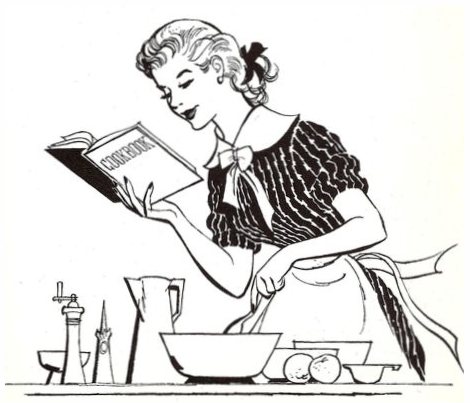
Textbooks:
- First Course in Home Making by Maude Richman Calvert, Leila Bunce Smith (Turner E. Smith Company, 1928)
- Young Folks at Home: Home Economics for Junior High School by Florence LaGanke Harris, Treva E. Kauffman (D.C. Heath, 1948)
- Your Home and You by Carlotta C. Greer, Ellen P. Gibbs
- How You Plan and Prepare Meals by Byrta Carson and MaRue Carson Ramee (McGraw-Hill, 1962)
- Experiences in Homemaking by L. Belle Pollard, Helen H. Laitem and Frances S. Miller (Ginn and Co., 1964)
- Buying Food (1950)
- Cooking Terms (c. 1949)
- A Date with Your Family (c. 1950)
- Good Eating Habits (c. 1951)
- Good Table Manners (c. 1951)
- Mind Your Manners (c. 1953)
- How to Be Well-Groomed (c. 1949)
- Act Your Age (c. 1949)
- Joan Avoids a Cold (c. 1947)
- Attitudes and Health (c. 1949)
- Exercise and Health (c. 1949)
- Rest and Health (c. 1949)
- Good Sportsmanship (c. 1950)
- Let's Share with Others (c. 1950)
- Am I Trustworthy? (c. 1950)
- How Honest Are You? (c. 1950)
- Let's Play Fair (c. 1949)
- Everday Courtesy (c. 1948)
- Social Courtesy (c. 1951)
- Beginning Responsibility: Taking Care of Things (c. 1951)
- The Fun of Being Thoughtful (c. 1950)
- Developing Self-Reliance (c. 1951)
- Right or Wrong? [Making Moral Decisions] (c. 1951)
- How Quiet Helps at School (c. 1953)
- Better Use of Leisure Time (c. 1950)
- Understanding Your Emotions (c. 1950)
- Understanding Your Ideals (c. 1950)
- Snap Out of It! [Emotional Balance] (c. 1951)
- Overcoming Fear (c. 1950)
- Shy Guy (c. 1947)
- Ways to Settle Disputes (c. 1950)
- Family Life (c. 1949)
- Sharing Work at Home (c. 1949)
- Friendship Begins at Home (c. 1949)
- The Benefits of Looking Ahead (c. 1950)
- What Makes a Good Party (c. 1950)
- Writing Better Social Letters (c. 1950)
- What Is Money? (c. 1947)
- Capitalism (c. 1948)
- Communism (c. 1952)
- Your Thrift Habits (c. 1948)
- Law and Social Controls (c. 1949)
NOVEMBER (Dedicated to The Holy Souls)

November 1st: All Saints' Day
- Father Phillip Tells a Ghost Story by Susan A. Brindle
- Projects: All Saints' Party Decorations, Saints and Souls Tree
- See also: My Dia de los Muertos post
- Catholic Mosaic: The Spirit of Tio Fernando (Also suggested: The Catholic Book of the Dead by Ann Ball)
- Mondays with Mary: "The Presentation of the Blessed Virgin Mary" plans, p. 38-41
November 22: St. Cecilia
November 27th: Our Lady of the Miraculous Medal
November 27th: Our Lady of the Miraculous Medal
- St. Catherine Miraculous Medal Unit Study
- Our Lady of the Miraculous Medal Story Coloring Book by Mary Fabyan Windeatt
- Mondays with Mary: "Our Lady of the Miraculous Medal" plans, p. 46-49
- Video: St. Catherine Laboure and the Miraculous Medal

December 4th: St. Barbara
- Traditional recipes can be found here.
- See last year's Saint Nicholas Day Plans
- Take It to the Queen by Josephine Nobisso
- Mondays With Mary: "Solemnity of the Immaculate Conception" plans, p. 133-136
- Saint Juan Diego and Our Lady of Guadalupe by Josephine Nobisso
- Catholic Mosaic: The Lady of Guadalupe by Tomie dePaola
- DVD: Guadalupe
- Mondays with Mary: "Our Lady of Guadalupe" plans, p. 91-93
- Our Lady of Guadalupe Story Coloring Book by Mary Fabyan Windeatt
- Craft: Our Lady of Guadalupe Tinwork Ornament
- Food/Drink: Our Lady of Guadalupe at Catholic Cuisine
- See also: Our Lady of Guadalupe at O Night Divine (very thorough!)
- See last year's: Santa Lucia Day Plans
- St. Lucy Unit Study
- The Night of Las Posadas by Tomie dePaola; Las Posadas: An Hispanic Christmas Celebration by Diane Hoyt-Goldsmith
- Las Posadas at Catholic Culture: I, II, III
- Las Posadas and Christmas Novena from Fish Eaters


© Guago
Last year I really wanted to have a Día de los Muertos/Day of the Dead celebration, but was entirely too disorganized to make it happen. This year, I'm planning early so that I have ample time to collect supplies and get prepared (for one thing, the sugar skull blanks will need to be made well in advance so that they have time to dry.)
Day of the Dead is a traditional Mexican holiday that coincides with All Saints' Day (November 1st) and All Souls' Day (November 2nd). In most regions of Mexico, November 1st, called Día de los Inocentes ("Day of the Innocents") or Día de los Angelitos ("Day of the Little Angels"), honors children and infants. Deceased adults are honored on November 2nd, called Día de los Muertos/Día de los Difuntos ("Day of the Dead"). Some good information about the holiday can be found here, and you can find all things Day of the Dead here (including a 31-page Teacher Packet and videos).
Below are some of my ideas for our celebration. More inspiration can be found at the Día de los Muertos group on Flickr and DIYLife's Day of the Dead Traditions and Projects is extremely thorough.


- El Dia De Los Muertos: The Day of the Dead (Rookie Read-About Holidays) by Mary Dodson Wade
- Day of the Dead by Tony Johnston and Jeanette Winter
- Calavera Abecedario: A Day of the Dead Alphabet Book by Jeanette Winter
- The Spirit of Tio Fernando: A Day of the Dead Story by Janice Levy
- Mexican Folk Art Coloring Book

- Day of the Dead Crafts: A long, awesome list of crafts from AZCentral -- See also: Diary of a Crafty Chica; I'm thinking we'll try the Embossed Tin Prayer Candle and Calaca Sugar Masks
- Day of the Dead Crafts: More than 24 Projects that Celebrate Dia de los Muertos by Kerry Arquette
- See also: Making Shadow Boxes and Shrines by Kathy Cano-Murillo (I've had this book for years and love it!)
- In addition to the links below, Silver Crow Creations is one of my favorite suppliers for Day of the Dead craft items.
- Easy Paper Flowers (Alternatively, you could order them here) -- Marigolds are the traditional Day of the Dead flower.
- Papel Picado Banners
- Calaveras
- Prayer Candles
- Party and Craft Supplies (Also, here)
- For the feast table: Mexican Serape Blankets or a Mexican Oil Cloth Tablecloth (Day of the Dead designs are available), Sugar Skulls, Pan de Muertos, etc.
- Day of the Dead Altar/Ofrenda (See also: Flickr Offrendas Group)

© John3000

- Cookbook: Frida's Fiestas: Recipes and Reminiscences of Life with Frida Kahlo by Marie-Pierre Colle (Includes a 'Day of the Dead' menu with recipes)
- Pan de Muerto (Bread of the Dead) recipe
- Calabaza en Tacha recipe (Candied Pumpkin)
- Virgin Banana Margaritas
- Skull Cakes


Pan de Muerto © 2Camels

© Vecky22
SEPTEMBER (Dedicated to Our Lady of Sorrows)

The Seven Sorrows of the Virgin, Albrecht Durer, 1496
September 5th: Blessed Mother Teresa of Calcutta
- Mother Teresa by Demi
- DVD: Mother Teresa
- Coloring Pages: Mother Teresa 1, 2, 3, 4
- The Life of Mary by Inos Biffi
- Mondays with Mary: "Cause of Our Joy" plans
- Fleur-de-lis-Shaped Birthday Cake
- "The Story of the Holy Cross," from Stories of the Saints for Children (Public Domain)
- Video: Church of Santa Croce, Rome, Italy: A short documentary about the church of St. Helen
- Craft(s): Stained Glass Cross Craft?
- Coloring Page: St. Helena with Cross
- Food/Drink: Cross-Shaped Cake (Cake Pans); Basil Pesto Pasta for dinner -- tradition says that sweet basil grew all over the hillside where Saint Helena discovered the holy cross.)
- Mondays with Mary: "Our Lady of Sorrows" plans
- Tears of Our Lady
September 23rd: St. Padre Pio
- Padre Pio by Father Lovasik
- DVD: Padre Pio: Between Heaven and Earth -OR- Padre Pio, Miracle Man
- Coloring Page: St. Pio of Pietrelcino
- Food/Drink: Cappuccino Mousse
- See last year's Michaelmas Planning Notes
- Food/Drink: Apple Chicken with Gnocchi

Our Lady of the Rosary Day, Albrecht Durer, 1506
- Candles to represent the Four Mysteries of the Rosary. (Castle of the Immaculate)
- Teaching the Rosary: Resources
- DVD: Thérèse -OR- St. Therese of the Child Jesus
- Craft(s): Chocolate Roses for St. Thérèse, Sacrifice Beads
- Coloring Pages: St. Therese the Little Flower, St. Therese
- Food/Drink: Sour Cream Rose-Shaped Cupcakes with Rosewater Icing and White Rose Tea (Mealtime Prayer)
- See also: Plans for the Feast of St. Thérèse
- Books for the Feast of St. Francis
- DVD: Clare and Francis
- Craft(s): Homemade Bird Feeders (or here, or here)?
- Coloring Pages: 1, 2; St. Francis of Assisi Story Coloring Book by Mary Fabyan Windeatt
- Mondays with Mary: "Our Lady of the Most Holy Rosary" plans
- Craft(s): Paper Rosary Beads
- Coloring Pages: Our Lady of the Rosary, Color and Pray the Holy Rosary
- Food/Drink: Cupcake Rosary
- See plans and notes at Liturgical Living and The Bookworm
- A coloring page can be found in the Mother of God Coloring Book by Katherine Sotnik (Ignatius)
- Mondays with Mary: "Our Lady of Fatima" plans
- DVD: The Miracle of Our Lady of Fatima
- Coloring Pages: Our Lady of Fatima; Our Lady of Fatima Story Coloring Book by Mary Fabyan Windeatt
- Food/Drink: The Miracle of the Sun Cake
- DVD: St. Teresa of Avila
- Coloring Pages: St. Teresa Coloring Page; St. Teresa of Avila Story Coloring Book by Mary Fabyan Windeatt
- Food/Drink: Genoise Book-Shaped Cake -OR- Pan de Santa Teresa
While browsing on Ebay this morning, I found a seller with the most gorgeous reproduction posters. They're 13" x 9" and $12.98 (including shipping) and come in a wide variety of categories. Most pertain to American history, though he has many religious posters as well. A few of these are shown below (click on the images to enlarge).


Subscribe to:
Posts (Atom)


