





A "Just William" television series was produced in the 1960s, 1970s, and 1990s, with the BBC creating four new episodes again last year (these will be released on DVD in the UK March 2011).
Below are the episodes from 1994 with links to those that are currently available online.
Series One:
- William and the Russian Prince
- William's Busy Day
- William - The Great Actor
- William and the White Elephants
- Finding a School for William
- William's Birthday
- William Clears The Slums
- Parrots for Ethel
- William's Truthful Christmas
- Boys Will Be Boys
- William and the Ebony Hair-Brush
- William and the Old Man in the Fog
- William Turns Over a New Leaf

BBC: Just William, 2010 (Available on DVD 03/2011)
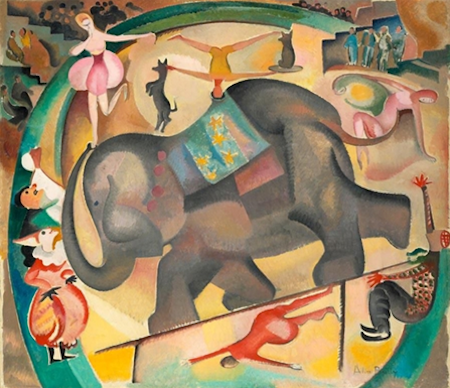
L'Elephant
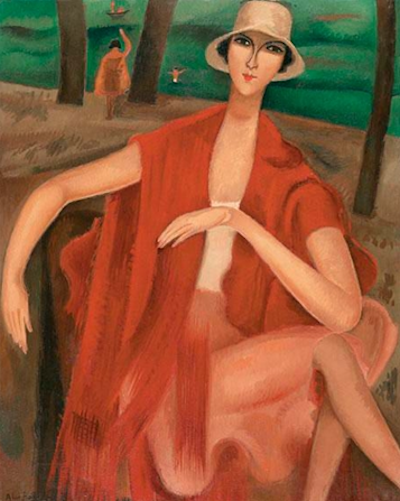
Femme en rouge
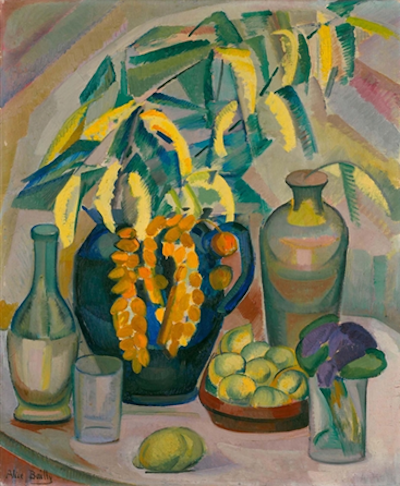
Nature mort aux mimosas
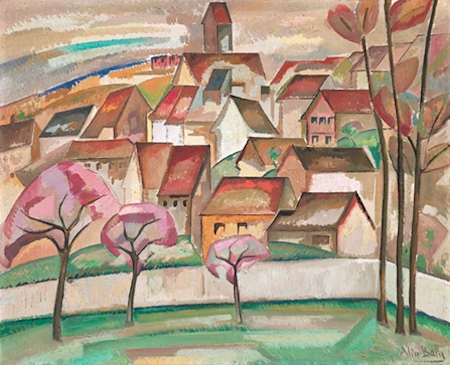
Le village
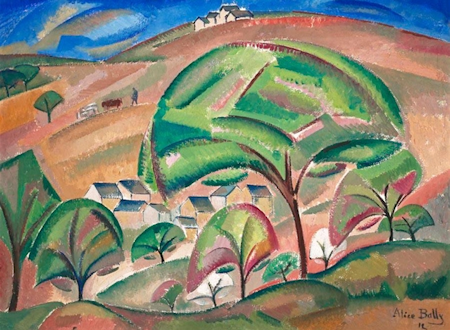
Paysage à Orsay (L'Arbre Vert)
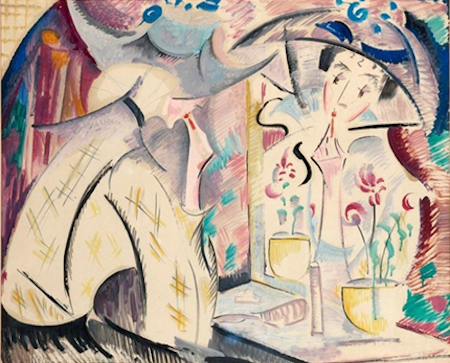
Femme au miroir
Alice Bailly (February 25, 1872 – January 1, 1938) was a radical Swiss painter, known for her interpretation of cubism and her multimedia wool paintings. Biography
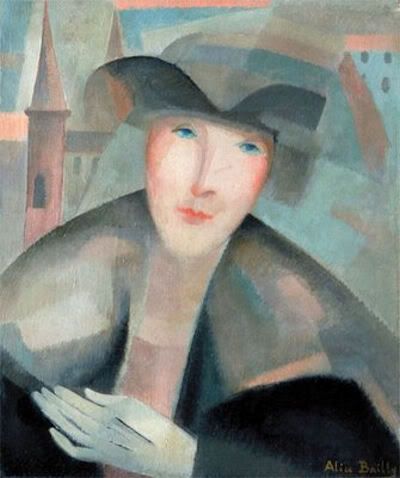
Femme au gant blanc
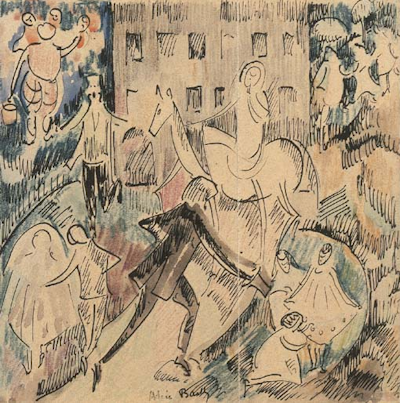
Hochzeitsfest
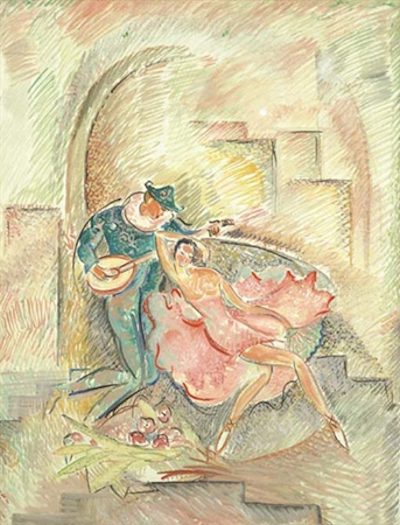
Arlequin et femme
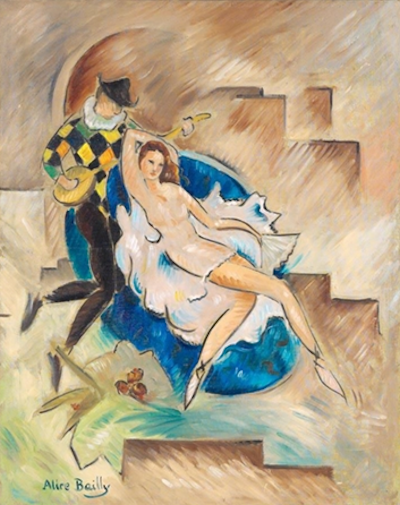
Danseuse avec arliquin
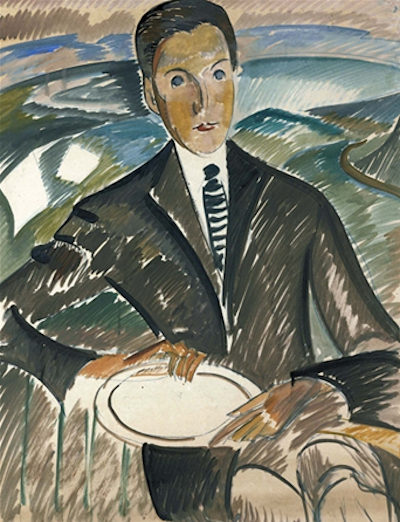
Portrait d'un jeune homme
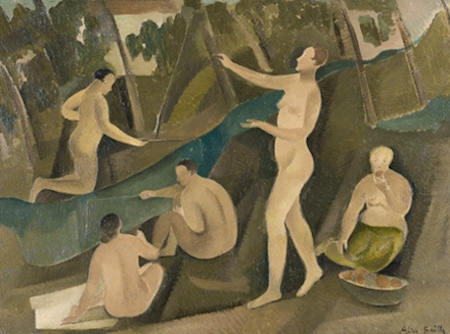
Au bord du ruisseau

© Bernard Buffet, 1956
Dictation, often largely adopted as a method of teaching, is really only a method of testing spelling. A child who makes no mistakes learns nothing from it. Still, dictation, employed, like oral spelling, with moderation and intelligence, is a useful and necessary exercise. It may be made an incentive for the careful study of all the hard words in a given 'piece,' and it shows what pupils and what words call for special attention.
Having selected the passage to be dictated, the teacher reads it aloud. A knowledge of the meaning of the whole will help the childdren to catch the sound of each separate word, and to decide between the different spellings by which the same sound is sometimes represented.
The passage is then dictated in sections of from two to six words, according to the age of the children and to the sense. The teacher should speak clearly enough for every one who is listening to hear and understand, and there should be, as a rule, no repetition. Children will not attend the first time if they think that there will be a second time. The rate of dictation should be regulated by watching a good writer of average speed. 'Copying' must be prevented by every means, moral and mechanical.
After the dictation comes the correction. If this be not thorough, the exercise is worse than valueless. A misspelling indicates a false impression of the form of a word, and this is deepened by iteration. Every mistake must, therefore, be discovered, and the correct spelling written a sufficient number of times to remove the false and imprint the true impression. The best method of correction is for the teacher to examine every exercise himself (the children, meanwhile, being usefully employed), but this is possible only with small classes. The method of mutual correction generally adopted is open to three objections—the corrector's own right spelling may be confused or wrong spelling confirmed by the mistakes of the corrected; errors may be passed over; and there is a constant temptation for the child to look at his own exercise instead of the one before him. This temptation can be largely overcome by good discipline, and entirely obviated by a simple device. The child at the upper end of each row of desks takes his own book (or slate) and that of his neighbour to the lower end of the row; the remaining books (or slates) are then passed up two places.
A better plan than mutual correction is for each child to correct his own, but this can be followed only when the training in honesty and carefulness has been successful.
Whatever method is adopted for marking errors, all words misspelled should be written accurately several times. While this is being done some pleasant occupation should be found for the children who have no errors, and the teacher should go round the class glancing at each exercise, and more than glancing at the exercises of children likely to have many errors.
A note should be made of the words misspelled, and after a few days they should be dictated again, for it must be remembered that memory impressions are deepened by interest or by repetition, and, as spelling cannot often be made interesting, repetition is essential.
(From The Art of Teaching by David Salmon, 1898)
The Dictation Day by Day/Modern Speller Series
Suggestions to Teachers: One dictation exercise constitues a day's lesson; but, in addition, assign three or four words from the review lists which follow every fourth lesson. When the four dictations and the review have been taught, review the week's work and teach no new matter. Keep a list of the words misspelled daily, and on Friday drill on these.
- The Modern Speller, Book 1 by Kate van Wagenen
- The Modern Speller, Book 2 by Kate van Wagenen
- Dictation Day by Day, A Modern Speller, 3rd Year by Kate van Wagenen
- Dictation Day by Day, A Modern Speller: 4th Year by Kate van Wagenen
- Dictation Day by Day, A Modern Speller: 5th Year by Kate van Wagenen
- Dictation Day by Day, A Modern Speller: 6th Year by Kate van Wagenen
The Journal of a Disappointed Man by W.N.P. Barbellion
0 comments Posted by Kristine at 1/15/2011 07:18:00 PM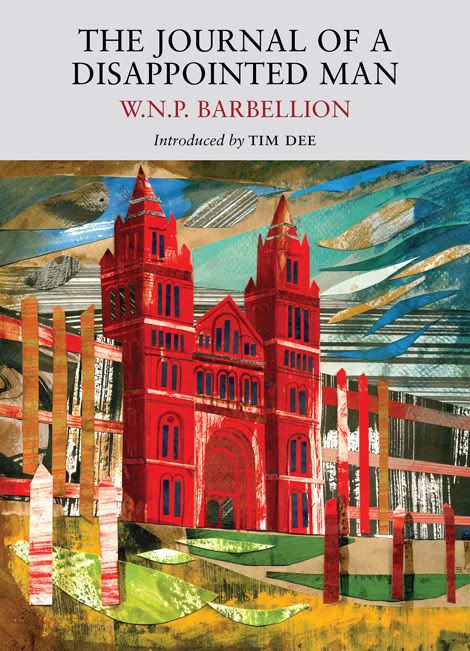
This week I read The Journal of a Disappointed Man by W.N.P. Barbellion, my third book for 52 Books in 52 Weeks. The Journal was recently re-published by Little Toller Books in the UK and is also available in the public domain via Google Books and the Internet Archive. It has been called a "masterpiece of personal observation," likened to the work of writers such as Franz Kafka and James Joyce, and was described by Ronald Blythe as "among the most moving diaries ever created."
W.N.P. Barbellion was the nom-de-plume of Bruce Frederick Cummings (7 September 1889 - 22 October 1919). The initials W.N.P. stood for Wilhelm Nero Pilate, whom the author thought to be the most despicable people in history (Wilhelm being Kaiser Wilhelm the II since the diaries were published during the First World War). Barbellion was a name above a shop in South Kensington that Cummings passed every day.

"He read all kinds of books, from Kingsley to Carlyle, with an insatiable appetite. It was about this time, too, that he began those long tramps into the countryside, over the hills to watch the staghounds meet, and along the broad river marshes, that provided the beginnings and the foundation of the diary habit, which became in time the very breath of his inner life.
In these early years, I remember, the diary took the outward form of an old exercise book, neatly labelled and numbered, and it reflected all his observations on nature. The records, some of which were reproduced from time to time in The Zoologist, were valuable not only in their careful exactitude, but for their breadth of suggestion, and that inquiring spirit into the why of things which proved him to be no mere classifier or reporter. They were the outcome of long vigils of concentrated watching."
He taught himself how to dissect, and afterwards his patient and unerring skill surprised his examiners. "Scientists and naturalists of repute--reading his published records of observations--called upon him and were puzzled to find him a mere boy." By the time he was fourteen, "his fixed determination to become a naturalist by profession was accepted by all of us as a settled thing." (A.J. Cummings, A Last Diary)
Despite being almost entirely self-taught, in October 1911 he placed first in an examination for a position at the British Museum of Natural History in London, and in January 1912 commenced an assistantship there.
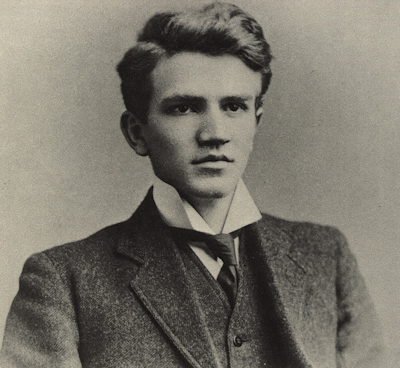
Bruce Frederick Cummings c. approx. 1910
"For an unusually long time after I grew up, I maintained a beautiful confidence in the goodness of mankind. Rumours did reach me, but I brushed them aside as slanders. I was an ingénu, unsuspecting, credulous." (The Journal of a Disappointed Man)
Gradually, as his ambitions began to change, his writing evolved from the dry scientific notes of the earlier Journal into something more personal and literary (and hence, imminently more readable!).
"He wrote down instinctively and by habit his inmost thoughts, his lightest impression of the doings of the day, a careless jest that amused him, an irritating encounter with a foolish or a stupid person, something newly seen in the structure of a bird's wing, a sunset effect. It was only on rare occasions that he deliberately experimented with forms of expression." (A.J. Cummings, A Last Diary)
There is an element of despair throughout the Journal as he struggled with chronic ill-health (and a fair amount of hyperchondria), and also occasional bouts of depression. "Chronically sub-normal" was how he once described his condition to his brother. In London, he grew slowly and steadily worse and, upon the advice of his brother saw a "first-class nerve specialist" who promptly diagnosed him with what we now call multiple sclerosis. Yet the decision was made not to tell him the true nature of his illness, so as not to precipitate his demise.
In October of 1914, he discovered the Journal of the Russian painter Marie Bashkirtseff (1858–1884). “I am simply astounded," he writes. “It would be difficult in all the world’s history to discover any two persons with temperaments so alike. She is the ‘very spit of me’!” This seems to have inspired his decision, in December of that year, to "prepare and publish a volume of this Journal."
The diaries, up through the winter of 1917 were eventually published in March 1919 and the book was an immediate sensation (though many believed it was a work of fiction, written by H.G. Wells who had written book's preface). A later journal entitled A Last Diary was published after his death in 1919, as well as a book of essays, Enjoying Life and Other Literary Remains.

"I do not think that there can be two minds about the great literary qualities and the poignant interest of his one tragic work. It is a book that is continually sought and steadily reprinted – the story of a soul in the grip of the obscure and pitiless arterial [sic] disease that finally killed him, resolved to find expression and a use for itself in the ever darkening shadow of death. 'Barbellion’s Diary' I am convinced will still be read with interest, curiosity and sympathy, when most of the larger more fluid successes of to-day have passed out of attention." (H. G. Wells, letter to Barbellion’s widow, 8 September 1925, Source)
"For as long as his remarkable journal is published he will live with it, his constrained existence celebrated for the courage that so brightly distinguishes it." (William Trevor, “On the Shelf”, Sunday Times, 5 November 1995, Source)
"To me the honour is sufficient of belonging to the universe — such a great universe, and so grand a scheme of things. Not even Death can rob me of that honour. For nothing can alter the fact that I have lived; I have been I, if for ever so short a time. And when I am dead, the matter which composes my body is indestructible—and eternal, so that come what may to my 'Soul,' my dust will always be going on, each separate atom of me playing its separate part — I shall still have some sort of a finger in the pie. When I am dead, you can boil me, burn me, drown me, scatter me — but you cannot destroy me: my little atoms would merely deride such heavy vengeance. Death can do no more than kill you." (The Journal of a Disappointed Man)
Boat on the River Taw, Barnstaple, Devon © dotjay
Bill Brandt, British photographer and photojournalist
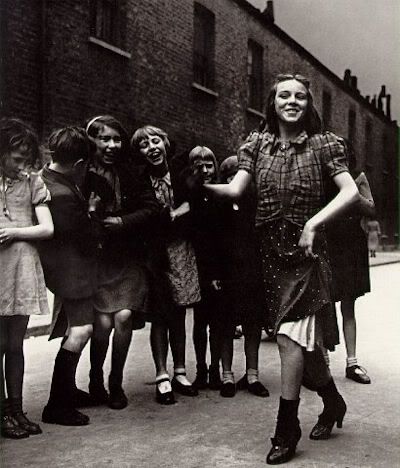
Lambeth Walk, 1936
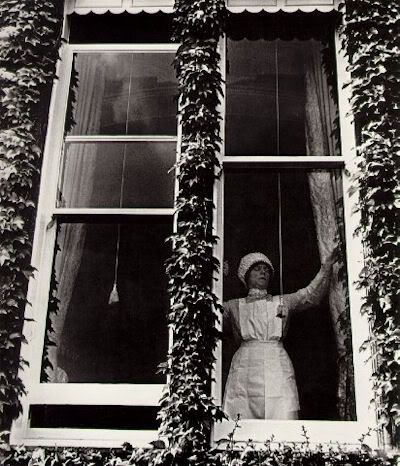
Parlourmaid in Window, Kensington, 1936
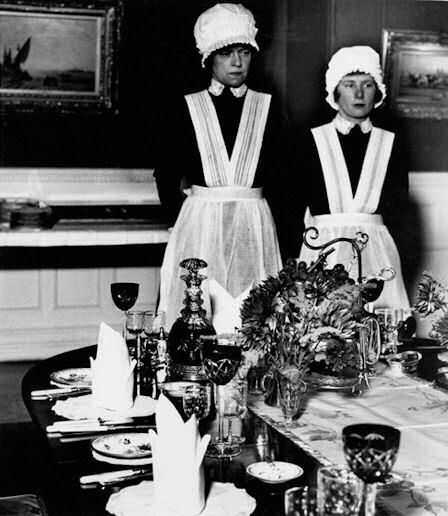
1936
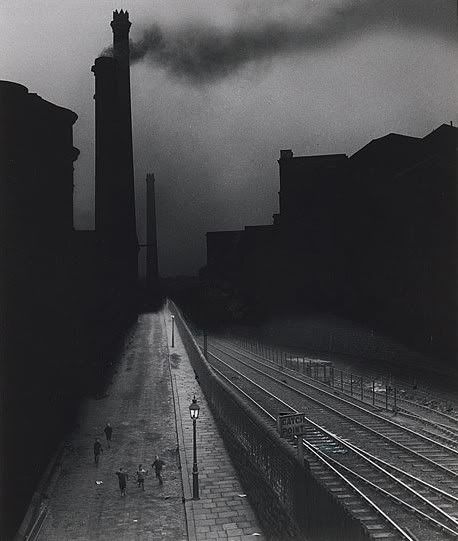
Halifax, 1937
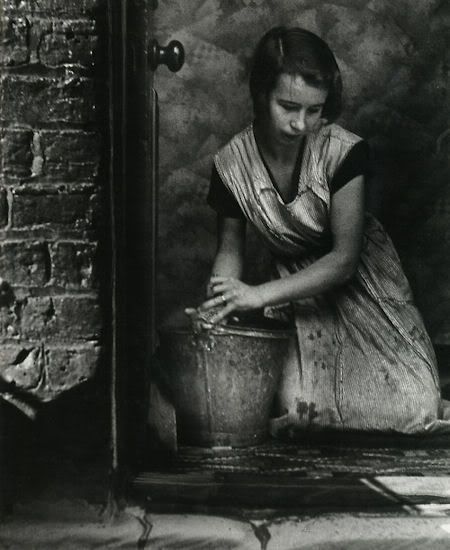
East End, 1937
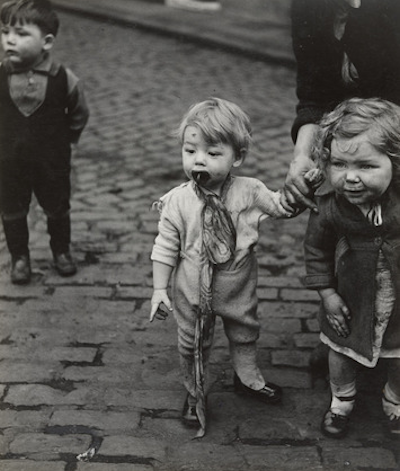
Children in Sheffield, 1937
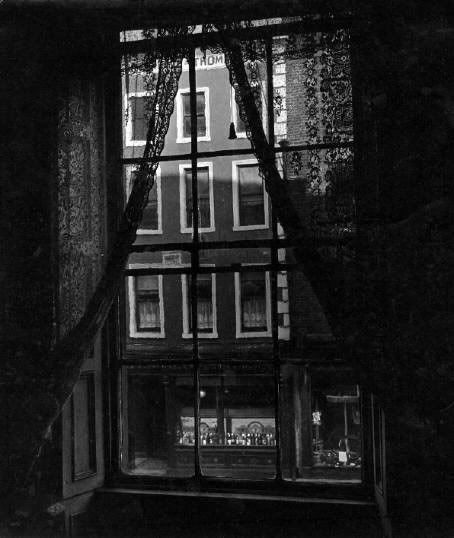
The House Opposite 12 , Anguir Street, Dublin
(Birthplace of Thomas Moore)
(Birthplace of Thomas Moore)
Since much of my reading last year pertained to the Victorians, this year I've decided to dive into the 20th century. My focus will be on [mostly British] women's writing from the period prior to the Great War through the 1950s.
With that in mind, I've compiled the following reading list for myself, picking and choosing whatever looked interesting, and likely missing some gems along the way. I don't expect to read every book here, because I'm sure I won't manage, and there will undoubtedly be numerous rabbit-trails to lead me astray. Nevertheless, it should be an enjoyable reading year!
World War I

- [Pre-WWI] The Edwardians by Vita Sackville-West.
- The Virago Book of Women and the Great War edited by Joyce Marlow
- High Wages by Dorothy Whipple: Another novel by Persephone's bestselling writer about a girl setting up a dress shop just before the First World War.
- Round About a Pound a Week by Maud Pember Reeves: A study of working-class life in Lambeth before WWI that is witty, readable, poignant and fascinating - and relevant nowadays. (Public Domain)
- Home Fires in France by Dorothy Canfield Fisher: A collection of 11 short stories based on the author's war work in France. (Public Domain)
- Christine (1917) by Elizabeth von Arnim (published under the pseudonym Alice Cholmondeley). Info. (Public Domain)
- This is the End (1917) by Stella Benson: A novel set in London during the First World War, written while the war was still going on. It features a lady novelist, a woman bus conductor and a variety of indecisive men. (Public Domain)
- A Diary Without Dates (1918) by Enid Bagnold: An intimate, informal diary of the writer's personal experiences in a hospital for the war victims, vividly done and extremely good reading. (Public Domain).
- The War Workers by EM Delafield - Published in 1918, the story centers around the characters that live and work at an army support institution during WWI. (Public Domain)
- Missing (1917) by Mrs. Humphrey Ward. (Public Domain)
- The War and Elizabeth (1918) by Mrs. Humphrey Ward (Public Domain)
- Testament of Youth by Vera Brittain: One of the most famous autobiographies of the First World War, is Brittain's account of how she survived the period; how she lost the man she loved; how she nursed the wounded and how she emerged into an altered world.
- William - an Englishman by Cicely Hamilton: Prize-winning 1919 novel about the effect of WWI on a socialist clerk and a suffragette. (Public Domain)
A list of outstanding work by WWI Women Writers on WWI can be found at FirstWorldWar.com.
Between the Wars
- Vile Bodies by Evelyn Waugh: Satiric novel published in 1930 examining the frenetic but empty lives of the 'Bright Young Things.'
- Diary of a Provincial Lady (1930) by EM Delafield.
- Bricks and Mortar by Helen Ashton: An excellent 1932 novel by a very popular pre- and post-war writer, chronicling the life of a hard-working kindly Londy architect and his wife over thirty-five years. Review here.
- Our Spoons Came from Woolworths by Barbara Comyn. A young woman's life in 1930s Bohemian London. Review here.
- The New House by Lettice Cooper: A 1936 portrayal of the day a family moves into a new house, and the resulting adjustments and tensions. Review here.
- Lady Rose and Mrs. Memmary by Ruby Ferguson: A 1937 novel about Lady Rose, who inherits a great house, marries well - and then meets the love of her life on a park bench. A greate favorite of the Queen Mother. Review here.
- One Pair of Hands by Monica Dickens: A 1939 book which recounts the authors pre-WWII time working as a cook-general in various homes around London
- Manja: The Story of Five Children by Anna Gmeyner: A 1938 German novel about five children conceived on the same night in 1920, and their lives until the Nazi takeover in 1933. Review here.
- The Return of the Soldier by Rebecca West. (Public Domain)
- The Proper Place by O. Douglas. Review here.
- Mrs. Miniver by Jan Struther. Essays on life in pre-WWII London; originally appeared as a column in The Times.

- Wave Me Goodbye/Hearts Undefeated Omnibus, Women's Writing of the Second World War (Virago) edited by Anne Boston and Jenny Hartley
- The Provincial Lady in Wartime (1940) by EM Delafield.
- Henrietta's War: News from the Home Front 1939-1942 by Joyce Dennys. Review here and here.
- Henrietta Sees it Through: More News from the Home Front 1942-45 by Joyce Dennys. Review here.
- Nella Last's War: The Second World War Diaries of Housewife, 49 by Nella Last.
- An Interrupted Life: Etty Hillesum, The Diaries 1941-1943 by Etty Hillesum. Review here.
- Saplings by Noel Streatfield: A novel by the well-known author of Ballet Shoes, about the destruction of a family during WW2. Review here.
- House-Bound by Winifred Peck: This 1942 novel describes an Edinburgh woman deciding, radically, to run her house without help and do her own cooking; the war is in the background and foreground. Review here and here.
- Few Eggs and No Oranges by Vere Hodgson: A 600-page diary, written from 1940-45 in Notting Hill Gate, full of acute observation, wit and humanity. Review here.
- On the Other Side: Letters to My Children from Germany 1940-46 by Mathilde Wolff-Monckeberg: Written in Hamburg but never sent, these letters provide a crucial counterpoint to Few Eggs and No Oranges. Review here.
- Good Evening, Mrs Craven: The Wartime Stories of Mollie Panter-Downes: Superbly written short stories, first published in The New Yorker from 1938-44. Review here and here.
- There Were No Windows by Norah Hoult: A touching and funny novel, written in 1944, about an elderly woman with memory loss living in Kensington during the blitz. Review here.
- A House in the Country by Jocelyn Playfair: An unusual and very interesting 1944 novel about a group of people living in the country during WW2. Review here.
- The Heat of the Day by Elizabeth Bowen: A brilliant recreation of the tense and dangerous atmosphere of London during the bombing raids of World War II. Review here.
- Little Boy Lost by Marghanita Laski: Novel about a father's search for his son in France in late 1945. One of Persephone's best sellers! Review here.
- Doreen by Barbara Noble: A 1946 novel about a child who is evacuated to the country during the war. Her mother regrets it; the family that takes her in wants to keep her.
- Miss Ranskill Comes Home by Barbara Euphan Todd: An unsparing, wry 1946 novel: Miss Ranskill is shipwrecked and returns to a completely changed wartime England. Review here.

- The Bread and Butter Stories by Mary Norton: These 15 recently discovered short stories by the author of The Borrowers are wonderful period pieces about being an upper-middle class woman in the 1940s and early 50s.
- Tell It to a Stranger by Elizabeth Berridge: Funny, observant and bleak 1947 short stories, twice in the Evening Standard bestseller list. Review here.
- Minnie's Room: The Peacetime Stories of Mollie Panter-Downes 1947-1965: Second volume of short stories first published in The New Yorker. Review here.
- Nella Last's Peace: The Post-War Diaries of a Housewife, 49 by Nella Last.
- Nella Last in the 1950s: The Further Diaries of Housewife, 49 by Nella Last.
- The Little Stranger by Sarah Waters: A ghostly tale about the collapse of the British class system after WWII. Review here.
- Provinicial Daughter by RM Dashwood: A novel written by EM Delafield's daughter about the trials of a 1950s housewife in an English village.
- The Village by Marghanita Laski: This 1952 comedy of manners describes post-war readjustments in village life when love ignores the class barrier.
- Daddy's Gone A-Hunting by Penelope Mortimer: This 1958 novel is about the 'captive wives' of the pre-women's liberation era, bored and lonely in the suburbs. Review here.
- The Feminine Middlebrow Novel, 1920s to 1950s: Class, Domesticity, and Bohemianism by Nicola Humble
- A Very Great Profession: The Womans' Novel 1914 -39 by Nicola Beauman: A mixture of literary criticism and historical evocation, first published 25 years ago, about women writers of the inter-war period. Review here.
- Romantic Moderns: English Writers, Artists and the Imagination from Virginia Woolf to John Piper by Alexandra Harris
- The Great Silence: Britain from the Shadow of the First World War to the Dawn of the Jazz Age by Juliet Nicolson
- The Wartime House: Home Life in Wartime Britain 1939-1945 by Mike Brown and Carol Harris
- A Woman's Place by Ruth Adam: A survey of women's lives from 1900-75, very readably written by a novelist-historian: an overview full of insights. Review here.
- Enemy at the Door: Series 1, Series 2
- Wish Me Luck: Series 1, Series 2
- Wartime Britain: Boxed set including "The Heat of the Day" (based on the Elizabeth Bowen novel), "Housewife, 49" (based on the journals of Lancashire housewife Nella Last) and "Island at War."

After school, she had a brief stint as a student teacher, which she disliked immensely. In 1897, she found work as an actress with a touring company led by Edmund Tearle, and in 1906 wrote her first play, The Traveller Returns. Also at this time, she became involved with Emma Pankhurst's Women's Social and Political Union, the leading women's suffrage organization in Britain, and in 1907, Charlotte Despard's Women's Freedom League.
In 1908, the success of her play, Diana of Dobson's (subsequently adapted as a novel), brought her fame, making her an ideal candidate for public speaking. Thus, she became active on the lecture circuits as a popular and well-respected representative of the women's suffrage movement. That same year, she co-founded the Women Writers' Suffrage League and was instrumental in organizing the Actresses' Franchise League.

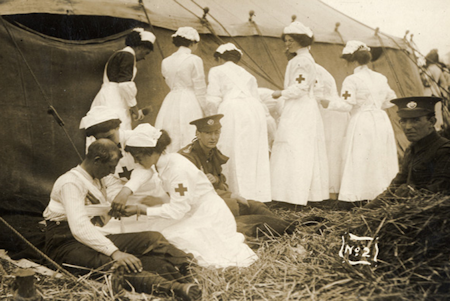
Cicely Hamilton (seated) working for the Scottish Women's Hospital Unit
At the outbreak of the Great War, she joined the Scottish Women's Hospital Unit, and in 1917 joined the Women's Auxiliary Army Corps. It was from an army tent, within the sound of guns and shells, where she wrote William, an Englishman: "written in a rage in 1918; this extraordinary novel... is a passionate assertion of the futility of war" (Persephone Books). The novel was an immediate success and earned her the Femina-Vie Heureuse prize for 1919.


Endpaper from William - an Englishman, Persephone Book No. 1
"Their standard of conduct was rigid and their views were pronounced; those who did not share their views and act in conformity with their standards were outside the pale of their liking. And this not because they were abnormally or essentially uncharitable, but because they had lived for so long less as individuals than as members of organizations - a form of existence which will end by sucking charity out of the sweetest heart alive.
It was well for them, therefore, that their creed, like their code of manners and morals was identical or practically identical. It was a simple creed and they held to it loyally and faithfully. They believed in a large, vague and beautifully undefined identity, called by William the People, and by Griselda, Woman; who in the time to come was to accomplish much beautiful and undefined good; and in whose service they were prepared meanwhile to suffer any amount of obloquy and talk any amount of nonsense. They believed that Society could be straightened and set right by the well-meaning efforts of well-meaning souls like themselves - aided by the Ballot, the Voice of the People, and Woman. They believed, in defiance of the teachings of history, that Democracy is another word for peace and goodwill towards men."
"With regard to what used to be called culture (before August, 1914), the attainments of William and Griselda were very much on a level. They read newspapers written by persons who wholly agreed with their views; they read pamphlets issued, and books recommended, by societies of which they were members. From these they quoted, in public and imposingly, with absolute faith in their statements. Of history and science, of literature and art, they knew nothing, or next to nothing; and, their ignorance being mutual, neither bored the other by straying away from the subjects in which both were interested."
To be perfectly honest, I was ready to toss this book after the first two chapters because William and Griselda annoyed me to no end. However, I decided that since Persephone had declared it "one of the greatest novels about war ever written," I should persevere.

A valley in the Ardennes Forest, Belgium © Pascallacsap
William and Griselda choose an isolated location for their three week honeymoon: a tiny cabin deep in the Belgium Ardennes, entirely shut off from the outside world. Ironically, the would-be internationalists do not know that war has just been declared.
For a time, all is perfectly blissful, but then they decide that perhaps life is "too peaceful," and that the Cause is calling them back home. They agree on a speedy departure, resolving to leave on the following day. As they set off the next morning, they find the farmhouse of Madame Peys (who had been cooking their meals) abandoned. Slightly disturbed by this, they eventually decide to walk to the nearest village, only to find it occupied by German soldiers. It is then that an English-speaking soldier informs them of the war and they are taken prisoner:
"Neither William nor Griselda had ever entertained the idea of a European War; it was not entertained by any of their friends or their pamplets. Rumors of war they had always regarded as foolish and malicious inventions set afloat in the interests of Capitalism and Conservatism with the object of diverting attention from Social Reform or the settlement of the Woman Question; and to their ears, still filled with the hum of other days, the announcement of Heinz was even such a foolish invention. Nor, even had they given him credence, would they in these first inexperienced moments have been greatly perturbed or alarmed; their historical ignorance was so profound, they had talked so long and so often in terms of war, that they had come to look on the strife of nations as a glorified scuffle on the lines of a Pankhurst demonstration."
The novel continues with their subsequent confrontation of the brutal realities of war, but I won't go into further detail for fear of spoiling the story. I must say that, in the end, I loved this book, and actually found myself feeling enormously sympathetic for William and Griselda. It has remained with me in a way that very few books do, and given me much to think about.
The book is available from Persephone Books, or in the public domain via Google Books. More information about the Battle of the Ardennes, which was fought between August 21-23, 1914 can be found here.

Destruction of a small village by the Germans, from Senlis (1917) by Cicely Hamilton
It was quite interesting to me that the book seemed to criticize or polk fun at many aspects of a cause which formerly was a central part of Cicely Hamilton's life. However, on closer examination, I realized how deeply she identified with the plight of William and Griselda and how this book, "written in a rage," reflected her own anger and disullionment. That involvement in the war caused her significant distress is apparent in much of her writing.
"Those who struggled hardest against the acceptance of the War-Fact of 1914 were, naturally enough, those who had fiery little battles of their own to fight, and whose own warfare was suddenly rendered null and incompetent by a sudden diversion of energy and interest in the face of the national danger. The war was the successful rival of their own, sectional strife, overshadowing its importance and sucking the life from its veins." (William, an Englishman)
She responded to the 1918 Representation of the People Act (allowing British women the right to vote) with a sense of disinterested fatigue. In Life Errant, her 1935 autobiography, she wrote:
"What use was the vote as a weapon against German guns, submarines and Gothas? The problem of the moment was to keep ourselves alive, and while a people engaged in a life-and-death struggle, it is apt to lose interest in matters which yesterday were of sufficient importance to raise it to a fury of dispute...I remember - how well I remember - receiving official intimation that my name had been placed on the register of the Chelsea electorate. I was in Abbeville at the time, and, as the post arrived, a battery of Archies began to thud; an enemy aeroplane was over taking photographs. I remember thinking, as I read the notice, of all that suffrage had meant for us, a year or two before! ...and that now, at this moment of achieved enfranchisement, what really interested me was not the thought of voting at the next election, but the puffs of smoke that the Archies sent after the escaping planes." (Suffrage Discourse in Britain During the First World War by Angela K. Smith)
Despite the fact that I'm currently reading a whopping five books at present, I recently felt the need to find some good new fiction, since all of my current reads are non-fiction. First, I browsed the catalogs at both Persephone Books and Virago Press for inspiration (this Virago Collection Tracker spreadsheet from LibraryThing members was also enormously helpful). Then, because I primarily wanted eBooks for my Kindle and Nook, I searched the Web to find out which books were also available in the public domain.
Unfortunately, I also ended up ordering a stack of books from both Amazon (At Mrs. Lippincote's, Consequences, Gone to Earth, The Edwardians, Mariana, and Nella Last's three WWII diaries) and Amazon UK (Miss Buncle's Book, Few Eggs and No Oranges, The Carlyles at Home, Lady Rose and Mrs. Memmary)! My husband will not be pleased.
Any of the Google Books/ePub files below can be converted to Kindle-compatible .Mobi files using the quick, easy and free eBook management software from Calibre.
Persephone Books
- William, an Englishman by Cicely Hamilton (Persephone - Google Books)
- Fidelity by Susan Glaspell (Persephone - Google Books)
- Consequences by E.M. Delafield (Persephone - Google Books)
- Reuben Sachs by Amy Levy (Persephone - Google Books)
- The Making of a Marchioness by Frances Hodgson Burnett (Persephone - Google Books)
- The Winds of Heaven by Monica Dickens (Persephone - Internet Archive)
- The Shuttle by Frances Hodgson Burnett (Persephone - Google Books)
- Round about a Pound a Week by Maud Pember Reeves (Persephone - Internet Archive)
- A New System of Domestic Cookery by Mrs. Rundell (Persephone - Google Books)
- Marriage (1818) by Susan Ferrier (About - Internet Archive)
- Deerbrook (1839) by Harriet Martineau (About - Internet Archive)
- The Story of an African Farm by Olive Schreiner (About - Google Books)
- The Lifted Veil by George Eliot (About - Google Books)
- The Persimmon Tree and Other Stories by Marjorie Barnard (About - Internet Archive)
- The Yellow Wallpaper by Charlotte Perkins Gilman (Virago - Internet Archive - Google Books)
- South Riding: A Novel (1936) by Winifred Holtby* (About)
- The Little Ottleys (Omibus): Love's Shadow, Tenterhooks, Love at Second Sight by Ada Leverson (About)
- A Diary Without Dates (1918) by Enid Bagnold (Virago Nonfiction; About - Many Books)
- The Happy Foreigner (1920) by Enid Bagnold (About - Many Books)
- The Squire* (1938) by Enid Bagnold (About - Internet Archive)
- The Three Miss Kings by Ada Cambridge (About - Google Books)
- Joanna Godden by Sheila Kaye-Smith (About - Google Books)
- Susan Spray* by Sheila Kaye-Smith (About - Internet Archive)
- The Reef by Edith Wharton (About - Internet Archive)
- The Clever Woman of the Family by Charlotte M. Yonge (About - Google Books)
- Elizabeth and her German Garden by Elizabeth von Arnim (Virago - Google Books)
- The Solitary Summer by Elizabeth von Arnim (Virago - Kindle Edition)
- The Enchanted April by Elizabeth von Arnim (Virago - Kindle Edition)
- The Caravaners by Elizabeth von Arnim (About - Internet Archive)
- My Antonia by Willa Cather (About - Internet Archive)
- The Song of the Lark by Willa Cather (About - Internet Archive)
- The Robber Bridegroom (1942) by Eudora Welty (About - Internet Archive)
- The Third Miss Symons (Virago - Kindle Edition)
- Mary Olivier: A Life by May Sinclair (Virago - Google Books)
- The Life and Death of Harriet Frean by May Sinclair (About - Google Books)
- The Three Sisters by May Sinclair (About - Internet Archive)
- Red Pottage (1900) by Mary Cholmondeley (About)
- Gone to Earth by Mary Webb (Virago - Google Books)
- The Return of the Soldier by Rebecca West (Virago)
- The Judge by Rebecca West (About)
- Open the Door! by Catherine Carswell (About - Internet Archive)
- An Unsocial Socialist by George Bernard Shaw (About - Internet Archive)
- Ann Veronica: A Modern Love Story by H.G. Wells (About - Internet Archive)
- Diana of the Crossways by George Meredith (About - Google Books)
- My Brilliant Career by Miles Franklin (About - Internet Archive)
- The Getting of Wisdom by Henry Handel Richardson (About - Google Books)
- Maurice Guest by Henry Handel Richardson (About - Google Books)
- The Odd Women: Vol 1, Vol 2, Vol 3 by George Gissing (About)
- Virginia by Ellen Glasgow (About - Google Books)
- The Semi-Attached Couple, and The Semi-Detached House by Emily Eden (About)
- Pilgrimage 1, Pointed Roofs by Dorothy M. Richardson (About - Google Books)
- Pilgrimage 2,Backwater by Dorothy M. Richardson (About - Google Books)
- Pilgrimage 3, Honeycomb by Dorothy M. Richardson (About - Internet Archive)
- Pilgrimage 4, The Tunnel by Dorothy M. Richardson (About - Google Books)
- The Beth Book (1897) by Sarah Grand (About - Google Books)
- Belinda (1801) by Maria Edgeworth (About)
- Evelina (1778) by Fanny Burney (About)
- Camilla (1796) by Fanny Burney (About)
- Emily Fox-Seton by Frances Hodgson Burnett (This includes The Making of a Marchioness, above, and its sequel)
- The Minor Pleasures of Life (1934) by Rose Macaulay
- False Goddesses (1923) by Rachel Ferguson
- The Glory of the Conquered (The Story of a Great Love) (1909) by Susan Glaspell
- The Visioning (1911) by Susan Glaspell
- High Rising (1951) by Angela Thirkell (About)
- Fletchers End (1962) by D.E. Stevenson*
- The Happy Highways (1920) by Storm Jameson
- In the Second Year: Radical Fictions (1936) by Storm Jameson (About)
- Christine (1917) by Elizabeth von Arnim
- Vera (1921) by Elizabeth von Arnim
- The Nightingales Are Singing (1953) by Monica Dickens
- The Rosary (1909) by Florence Barclay
- The White Ladies of Worcester: A Romance of the 12th Century (1917) by Florence Barclay
- Miss Marjoribanks (1866) by Mrs. Oliphant (About)
- The War Workers (1918) by E.M. Delafield
- Mary Olivier: A Life (1919) by May Sinclair (About)
- Tension (1920) by E.M. Delafield
- The Heel of Achilles (1920) by E.M. Delafield
- Humbug (1921) by E.M. Delafield
- Messalina of the Suburbs (1928) by E.M. Delafield
- Road Through the Woods (1961) by Pamela Frankau
- Collision (1913) by Mary Borden
- The Romantic Woman (1916) by Mary Borden
- The Tortoise (1921) by Mary Borden
- Jane - Our Stranger (1923) by Mary Borden
- The Amazing Interlude (1918) by Mary Roberts Rinehart
- The Garden Party and Other Stories (1922) by Katherine Mansfield
- Gigolo (1922): Short stories by Edna Ferber
- Lady Rose's Daughter by Mrs. Humphrey Ward: "The best-selling novel of 1903."
- The Milky Way (1914) by F. Tennyson Jesse
- The Happy Bride (1920) by F. Tennyson Jesse
- The Long Day (The Story of a New York Working Girl, As Told by Herself) (1905) by Dorothy M. Richardson (About)
- Pilgrimage 5, Interim (1920) by Dorothy M. Richardson
- Pilgrimage 6, Deadlock (1921) by Dorothy M. Richardson

Subscribe to:
Posts (Atom)